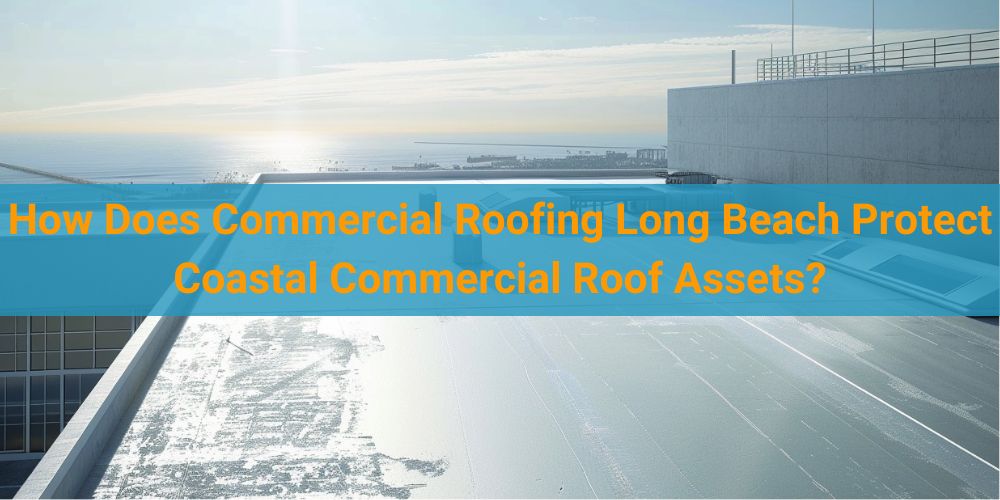
Commercial Roofing Long Beach protects coastal commercial roof assets by managing the roof as a weather-exposed building system that must resist water intrusion, marine-layer moisture, salt-air deterioration, UV ageing, wind movement, drainage overload, rooftop equipment stress, corrosion-prone details, and long-term service-life decline. This coastal roof asset protection applies to commercial, industrial, warehouse, logistics, marine-adjacent, port-adjacent, retail, office, restaurant, hospitality, flex industrial, multi-tenant, and mixed-use buildings where the roof must preserve membrane performance, seam integrity, flashing continuity, perimeter security, penetration reliability, rooftop equipment protection, drainage function, tenant continuity, interior protection, and long-term roof asset value. Commercial roofing is coastal asset management because the roof connects directly to parapets, coping systems, roof edges, edge metal, flashing assemblies, wall transitions, rooftop HVAC units, vents, drains, scuppers, gutters, penetrations, insulation, cover boards, roof decks, interior ceilings, tenant spaces, inventory areas, mechanical rooms, service corridors, and occupied commercial zones. Commercial Roofing Long Beach is not limited to emergency leak patching, isolated surface repair, coating application, or roof covering replacement; it evaluates whether the roof is still controlling coastal moisture, salt-air exposure, UV degradation, wind-driven rain, perimeter movement, membrane stress, rooftop equipment wear, hidden moisture damage, and service-life decline before small roof weaknesses become wider commercial property risks.
In Long Beach, coastal commercial roof asset protection is shaped by marine-layer humidity, salt-laden air, coastal condensation, Pacific wind exposure, strong sunlight, seasonal rain, rooftop HVAC activity, port-adjacent contaminants, service traffic, low-slope drainage sensitivity, ponding water risk, rooftop debris, and the operational demands of warehouse, logistics, industrial, restaurant, retail, office, hospitality, and multi-tenant commercial properties. These conditions can weaken the roof’s role as a protective exterior asset by accelerating membrane ageing, seam fatigue, flashing movement, sealant breakdown, coating wear, edge-metal corrosion, fastener stress, penetration-related leak risk, insulation exposure, cover board deterioration, substrate instability, concealed moisture movement, parapet deterioration, and roof-to-wall transition failure. Commercial Roofing Long Beach evaluates coastal roof asset risk by assessing roof system type, membrane condition, seam integrity, roof attachment, perimeter securement, roof-to-wall continuity, parapet details, coping systems, edge metal, flashing continuity, penetration sealing, rooftop equipment zones, drainage behaviour, ponding exposure, insulation risk, cover board condition, substrate stability, prior repairs, moisture evidence, corrosion-prone details, wind-sensitive areas, coastal exposure, and remaining service life. This determines whether the roof asset is best protected through maintenance, leak detection, targeted repair, edge reinforcement, flashing correction, penetration reinforcement, drainage correction, membrane reinforcement, roof coating, broader restoration, recover, partial replacement, full commercial roof replacement, documentation, or lifecycle planning.
Commercial Roofing Long Beach functions as a coastal commercial roof asset protection service where the roof must preserve the boundary between marine-adjacent exterior exposure and interior commercial use.
- Roof as coastal asset layer → the commercial roof receives marine-layer moisture, salt air, coastal condensation, UV exposure, Pacific wind, seasonal rain, rooftop debris, service traffic, and rooftop equipment activity before those conditions reach interior commercial areas → membranes, seams, flashings, parapets, roof edges, edge metal, drains, scuppers, gutters, penetrations, insulation, cover boards, and roof decks become the primary roof-side control points for coastal asset performance → Commercial Roofing Long Beach evaluates and protects these control points through inspection, maintenance, targeted repair, edge reinforcement, membrane reinforcement, coating, restoration, recover, partial replacement, or full replacement where required → water entry, concealed moisture spread, corrosion progression, and roof assembly deterioration are reduced → the Long Beach commercial roof remains a more reliable coastal asset.
- Salt-air deterioration and corrosion-prone detailing → coastal air can accelerate deterioration around edge metal, fasteners, coping systems, gutters, panel laps, rooftop equipment supports, exposed steel, flashing terminations, and metal roof components → corrosion weakens roof details even when the main membrane field appears serviceable → Commercial Roofing Long Beach identifies corrosion-adjacent defects before they become active leak paths, loose securement points, edge failures, or wider roof system vulnerabilities → rust treatment, fastener correction, metal replacement, compatible coating, edge reinforcement, or targeted repair is selected where required → salt-air deterioration is controlled around vulnerable roof zones.
- Perimeter and roof-to-wall continuity → commercial roofs connect into parapet walls, perimeter edges, coping systems, wall flashings, edge metal, termination details, vertical transitions, and adjacent exterior wall assemblies → coastal wind, marine moisture, ageing, thermal cycling, loose metal, poor detailing, and wind-driven rain can weaken the continuity between the roof perimeter and the wider building envelope → Commercial Roofing Long Beach identifies vulnerable roof-to-wall and edge conditions before perimeter weakness becomes progressive roof failure → edge-related leaks, wind-sensitive movement, parapet deterioration, moisture tracking, and transition failures are reduced → commercial interiors and perimeter asset continuity receive stronger coastal protection.
- Membrane, seam, and surface ageing control → flat and low-slope commercial roofs rely on membranes, seams, laps, welds, coatings, surfacing, and bonded joints to preserve waterproofing continuity across large roof areas → UV exposure, marine-layer moisture, ponding water, rooftop traffic, installation defects, coating breakdown, and ageing can weaken these continuous surfaces and linear details → Commercial Roofing Long Beach assesses seam integrity, membrane condition, coating wear, puncture risk, surface brittleness, repair compatibility, and remaining service life before selecting the roofing pathway → seam repair, membrane patching, coating, restoration, recover, partial replacement, or full replacement is chosen according to roof condition → surface-level ageing is separated from deeper roof assembly failure.
- Penetration and rooftop equipment protection → HVAC curbs, vents, pipes, conduit lines, skylights, hatches, exhaust units, service platforms, equipment supports, pipe penetrations, drains, and access paths interrupt the coastal roof asset layer → each interruption can become a moisture-entry point if flashing, sealant, curb height, reinforcement, equipment vibration, service access, discharge, or surrounding drainage performance is poor → Commercial Roofing Long Beach protects these breach-prone zones through inspection, leak detection, repair, re-flashing, reinforcement, walk path protection, restoration, partial replacement, or full replacement where required → penetrations and rooftop equipment zones are integrated back into the roof asset system → equipment rooms, tenant spaces, inventory zones, stored materials, and daily commercial operations receive stronger protection.
- Drainage and stormwater control → low-slope commercial roofs in Long Beach depend on clear drains, open scuppers, functional gutters, stable slopes, crickets, saddles, and controlled water routing to keep seasonal rainfall from overloading the roof asset → blocked drainage, rooftop debris, ponding areas, restricted outlets, deteriorated seams, saturated low areas, weakened flashings, and water-retaining details increase moisture pressure on the roof assembly after coastal rain events → Commercial Roofing Long Beach evaluates drainage behaviour as part of coastal roof asset protection and determines whether clearing, repair, slope correction, membrane reinforcement, coating, restoration, recover, partial replacement, or replacement planning is required → stormwater retention and moisture-entry pathways are reduced → roof asset condition, interior protection, and lifecycle cost control improve.
- Port-adjacent and industrial exposure management → commercial roofs near port-adjacent corridors, marine facilities, logistics zones, warehouses, restaurants, service yards, and industrial operations may face exhaust residue, airborne grime, grease exposure, equipment discharge, service traffic, chemicals, debris, and concentrated rooftop wear → these exposure conditions can reduce reflectivity, contaminate repair surfaces, weaken coating adhesion, stress membranes, and accelerate deterioration around equipment zones → Commercial Roofing Long Beach evaluates contamination, chemical compatibility, rooftop access patterns, membrane resilience, coating suitability, and detail vulnerability before recommending work → cleaning, preparation, compatible repair, reinforced coating, local replacement, or broader restoration is selected where needed → operational exposure is managed before it creates recurring roof failure.
- Hidden moisture and insulation-risk control → coastal roof damage is not always visible at the surface because water may migrate beneath membranes, through seams, around penetrations, into insulation, across cover boards, or along deck lines before interior symptoms appear → patching a visible defect without assessing moisture spread can trap water inside the roof assembly and shorten roof life → Commercial Roofing Long Beach reviews soft spots, staining, blistering, delamination, wet insulation indicators, drainage patterns, prior repairs, leak history, and substrate stability before selecting the next step → targeted repair is used where moisture remains localised, while restoration, recover, partial replacement, or full replacement is selected where hidden damage has spread → concealed deterioration is addressed before it becomes a larger asset failure.
- Coating, restoration, and recover viability → coastal commercial roofs may be candidates for reflective coating, elastomeric coating, silicone coating, acrylic coating, urethane coating, reinforced restoration, or recover where the existing roof remains dry, stable, compatible, and structurally viable → coating or recovering a saturated, unstable, severely ponded, corroded, or end-of-life roof can conceal failure rather than protect the asset → Commercial Roofing Long Beach checks adhesion potential, coating compatibility, moisture status, surface cleanliness, salt residue, drainage behaviour, substrate stability, and roof system type before recommending restoration → coating, restoration, or recover is used only where it can extend service life and improve roof performance → unnecessary tear-off is avoided without masking deeper failure.
- Lifecycle planning and asset documentation → coastal commercial roof assets are easier to control when roof condition, repair history, drainage concerns, equipment-zone wear, corrosion-prone details, coating age, membrane condition, and replacement timing are documented over time → reactive repair alone can allow small defects to become repeated leaks, tenant disruption, inventory exposure, interior damage, or emergency replacement → Commercial Roofing Long Beach supports lifecycle planning through inspection records, photo documentation, priority repair mapping, maintenance scheduling, coating suitability review, and replacement planning → owners gain clearer control over roof condition, risk timing, and budget decisions → long-term roof asset value is protected.
Commercial Roofing Long Beach protects coastal commercial roof assets through condition-based commercial roofing, not disconnected surface work. By confirming roof system type, membrane performance, seam integrity, flashing continuity, roof-to-wall stability, parapet condition, edge metal security, penetration risk, drainage behaviour, moisture evidence, rooftop equipment exposure, salt-air deterioration, corrosion-prone details, port-adjacent exposure, substrate stability, hidden assembly risk, asset vulnerability, and remaining service life before recommending work, Commercial Roofing Long Beach protects Long Beach commercial roofs as coastal exterior assets that must preserve waterproofing, operational continuity, and long-term building value.
How Do Coastal Conditions Threaten Long Beach Commercial Roof Assets?
Coastal conditions threaten Long Beach commercial roof assets by placing constant environmental pressure on the roof systems that protect commercial buildings from exterior exposure. Marine-layer moisture, salt-laden air, coastal condensation, Pacific wind, strong sunlight, seasonal rain, rooftop debris, port-adjacent contaminants, service traffic, and rooftop HVAC activity can weaken the roof long before failure is visible inside the building. Commercial Roofing Long Beach evaluates these conditions as roof asset risks because they can affect membrane performance, seam integrity, flashing continuity, edge security, rooftop equipment protection, drainage function, corrosion control, insulation condition, substrate stability, and remaining service life.
In Long Beach, commercial roof assets often protect warehouses, logistics buildings, industrial facilities, port-adjacent properties, marine-adjacent structures, retail centers, restaurants, office buildings, hospitality properties, flex industrial units, multi-tenant buildings, and mixed-use commercial sites. These properties rely on flat, low-slope, metal, TPO, PVC, EPDM, modified bitumen, built-up, coated, foam, and hybrid roof systems to preserve waterproofing, operational continuity, tenant protection, inventory security, equipment reliability, and long-term building value. Coastal exposure can turn small roof weaknesses into larger asset problems when moisture, salt, wind, UV, drainage pressure, corrosion, equipment wear, and hidden saturation act on the same roof assembly over time.
Commercial Roofing Long Beach protects coastal commercial roof assets by identifying how Long Beach exposure conditions affect roof materials, roof details, water movement, rooftop equipment zones, hidden assembly layers, and long-term asset viability before recommending maintenance, repair, coating, restoration, recover, partial replacement, or full commercial roof replacement.
- Marine-layer moisture → Long Beach marine-layer conditions can keep roof surfaces, seams, flashings, penetrations, drains, and equipment areas damp for extended periods → persistent surface dampness can reveal weak seams, slow coating cure, affect adhesion, encourage residue accumulation, and increase moisture sensitivity around existing roof defects → Commercial Roofing Long Beach evaluates damp-prone roof areas, coating suitability, membrane condition, and moisture evidence before selecting a roofing pathway → coastal moisture risk is controlled before it becomes concealed saturation or recurring leak activity.
- Salt-air deterioration → salt-laden air can accelerate deterioration around edge metal, fasteners, coping systems, gutters, scuppers, flashing terminations, panel laps, equipment supports, exposed steel, and metal roof components → corrosion can weaken roof securement and create water-entry points even when the main membrane field remains serviceable → Commercial Roofing Long Beach identifies corrosion-prone details before they become active leak paths, loose edge conditions, or wider roof system vulnerabilities → rust treatment, fastener correction, metal replacement, compatible coating, or targeted repair can protect the coastal roof asset.
- Coastal condensation and hidden moisture movement → repeated condensation and moisture exposure can move through failed seams, flashing openings, penetrations, drains, prior repairs, or roof-to-wall transitions into insulation, cover boards, or substrate layers → hidden moisture can reduce thermal performance, soften roof materials, destabilize substrates, and shorten roof service life → Commercial Roofing Long Beach reviews soft spots, staining, blistering, delamination, wet insulation indicators, leak history, and substrate stability before repair or restoration is selected → surface repairs are not used where hidden moisture has already compromised the assembly.
- Pacific wind exposure → coastal wind can stress roof edges, corners, parapets, coping systems, terminations, edge metal, fasteners, plates, adhesives, membrane seams, and rooftop equipment components → movement at these wind-sensitive areas can create uplift risk, edge leaks, flashing displacement, membrane stress, and progressive perimeter failure → Commercial Roofing Long Beach evaluates perimeter securement, roof-to-wall continuity, edge details, attachment stability, and wind-exposed zones before recommending work → wind-related roof movement is addressed before it compromises the wider roof asset.
- Strong UV exposure and surface ageing → Long Beach commercial roofs face sustained sunlight that can age membranes, dry out bituminous surfaces, oxidize metal panels, weaken coatings, embrittle vulnerable materials, fade reflective surfaces, and accelerate surface fatigue → UV-related ageing can reduce waterproofing performance, coating life, reflectivity, and repair reliability → Commercial Roofing Long Beach evaluates membrane condition, coating wear, surface brittleness, seam stability, film thickness, and remaining service life → repair, coating, restoration, recover, or replacement is selected before surface ageing becomes system-wide roof failure.
- Seasonal rain and low-slope drainage pressure → seasonal rainfall can expose drainage weaknesses across flat and low-slope commercial roof systems with blocked drains, restricted scuppers, clogged gutters, shallow slope, sagging areas, debris build-up, or water-retaining zones → standing water can stress seams, flashings, coatings, patches, penetrations, roof edges, insulation, and low areas of the roof assembly → Commercial Roofing Long Beach evaluates drainage behaviour, ponding exposure, drain-area condition, scupper performance, gutter function, and slope-related risks before selecting the correct intervention → stormwater pressure is reduced before it accelerates moisture intrusion and asset deterioration.
- Port-adjacent contaminants → port-adjacent, industrial, logistics, restaurant, service-yard, and marine-adjacent environments can expose roof surfaces to airborne grime, exhaust residue, grease, oils, chemical runoff, rooftop discharge, debris, and operational contaminants → contamination can reduce reflectivity, weaken coating adhesion, interfere with repair compatibility, obscure membrane damage, and accelerate surface degradation → Commercial Roofing Long Beach reviews exposure zones, surface cleanliness, chemical compatibility, coating suitability, membrane resilience, and preparation requirements before recommending work → roofing materials and repair methods are matched to the actual exposure profile of the property.
- Rooftop HVAC activity and service traffic → HVAC units, exhaust fans, vents, pipes, conduits, skylights, hatches, walk paths, service platforms, and mechanical supports concentrate wear across commercial roof assets → vibration, foot traffic, dropped tools, condensate discharge, grease exposure, equipment replacement, and repeated technician access can damage membranes, coatings, seams, flashings, and penetration details → Commercial Roofing Long Beach reviews equipment-zone wear, curb flashing condition, penetration sealing, access routes, walk path protection, and reinforcement needs → rooftop equipment areas are protected before they become recurring leak sources.
- Roof debris and blocked water routing → coastal wind, rooftop activity, nearby operations, and port-adjacent exposure can leave debris around drains, scuppers, gutters, roof edges, equipment curbs, and low-slope areas → debris can trap water, slow drainage, conceal defects, increase ponding exposure, and intensify membrane or coating deterioration → Commercial Roofing Long Beach evaluates water-routing paths, debris-prone zones, drainage access, and maintenance needs before recommending repair, coating, restoration, or replacement → roof drainage remains more reliable and moisture-entry pathways are reduced.
- Combined coastal exposure load → Long Beach roof assets rarely face one condition at a time because marine moisture, salt air, UV, wind, seasonal rain, equipment traffic, drainage pressure, and operational contaminants often act together → combined exposure can turn small defects into widespread seam fatigue, coating breakdown, corrosion spread, hidden saturation, flashing failure, and repeated leak cycles → Commercial Roofing Long Beach evaluates the full roof assembly rather than treating each symptom separately → the selected roofing pathway protects waterproofing reliability, operational continuity, and long-term roof asset value.
Commercial Roofing Long Beach treats coastal conditions as direct threats to commercial roof asset performance, not general background weather. By assessing marine-layer moisture, salt-air deterioration, coastal condensation, Pacific wind exposure, UV ageing, seasonal rainfall, drainage pressure, port-adjacent contaminants, rooftop HVAC activity, service traffic, roof debris, corrosion-prone details, hidden moisture risk, substrate stability, and remaining service life together, Commercial Roofing Long Beach helps Long Beach commercial properties protect roof assets before coastal exposure turns manageable defects into larger waterproofing, operational, and lifecycle problems.
Have a question about a commercial roofing project?
How Do Roof Details Protect Coastal Commercial Roof Assets?
Roof details protect coastal commercial roof assets by keeping the vulnerable connection points of the roof watertight, secure, drainable, serviceable, and compatible with the wider roof system. In Long Beach, the open field of a commercial roof is only one part of roof asset protection. Many failures begin where the roof changes direction, terminates at an edge, connects into a wall, surrounds rooftop equipment, receives service traffic, or moves water toward drains, scuppers, gutters, and discharge points. Commercial Roofing Long Beach evaluates roof details because these areas often determine whether marine-layer moisture, salt air, coastal condensation, Pacific wind, seasonal rain, rooftop debris, and port-adjacent contaminants remain outside the building or move into the roof assembly and interior commercial space.
Coastal commercial roof details include seams, laps, welds, flashings, parapet transitions, coping systems, edge metal, roof-to-wall connections, drains, scuppers, gutters, penetrations, HVAC curbs, vents, exhaust units, skylights, hatches, pipe supports, walk paths, fasteners, coating terminations, prior repair edges, insulation transitions, cover board joints, and substrate tie-ins. These details protect warehouses, logistics facilities, industrial properties, restaurants, retail buildings, office properties, hospitality sites, flex industrial spaces, multi-tenant buildings, marine-adjacent properties, and port-adjacent commercial assets from water intrusion, corrosion spread, hidden moisture movement, tenant disruption, inventory exposure, equipment damage, and premature roof replacement. Commercial Roofing Long Beach treats detail protection as coastal roof asset management because the long-term roof value depends on whether these small but critical locations remain stable under exposure, movement, drainage pressure, and rooftop use.
Commercial Roofing Long Beach protects coastal commercial roof assets by treating roof details as asset-control points where waterproofing, wind resistance, corrosion control, drainage performance, rooftop equipment protection, and hidden moisture prevention must work together.
- Seams, laps, and membrane joints → commercial roof membranes rely on continuous seams, laps, welds, bonded joints, and compatible repair edges to preserve waterproofing across large flat and low-slope roof areas → marine-layer moisture, UV exposure, rooftop traffic, ponding water, installation defects, ageing, or prior patching can weaken these linear details → Commercial Roofing Long Beach inspects, probes, repairs, re-welds, re-bonds, reinforces, or replaces seam areas according to roof system type → linear leak pathways are controlled before moisture spreads beneath the membrane and into insulation, cover boards, or deck layers.
- Flashing and roof-to-wall transitions → flashings, wall transitions, counterflashing, parapet returns, expansion joints, termination bars, and vertical tie-ins connect the roof to the wider building envelope → coastal wind, salt air, thermal movement, ageing sealants, loose metal, and poor detailing can open transition points even when the main roof field remains serviceable → Commercial Roofing Long Beach identifies weak roof-to-wall conditions and corrects flashing continuity before the detail becomes a moisture-entry route → wall-side moisture tracking, perimeter leaks, and envelope-related roof asset failure are reduced.
- Parapets, coping systems, and edge metal → parapets, coping caps, edge metal, fascia lines, gravel stops, terminations, corners, and perimeter details define how the roof resists wind, sheds water, and protects the roof boundary → Pacific wind exposure, salt-air deterioration, fastener movement, open joints, failed sealant, loose coping, and corrosion can weaken perimeter security → Commercial Roofing Long Beach reviews edge securement, coping condition, metal laps, fasteners, and termination details before selecting repair, restoration, recover, or replacement → uplift movement, edge-related leaks, and progressive perimeter failure are controlled.
- Drains, scuppers, gutters, and discharge points → low-slope commercial roofs depend on drains, scuppers, gutters, downspouts, crickets, saddles, strainers, and clear discharge paths to move seasonal rain away from vulnerable roof areas → debris, restricted outlets, shallow slope, sagging roof sections, salt residue, and port-adjacent grime can slow drainage and hold water against seams, coatings, flashings, and penetrations → Commercial Roofing Long Beach evaluates drainage details as roof asset control points and corrects water-routing issues where feasible → ponding pressure, moisture-entry pathways, and drainage-related roof deterioration are reduced.
- Penetrations, pipe boots, and service openings → pipes, vents, conduits, skylights, hatches, drains, roof access points, service lines, and other penetrations interrupt the roof surface and create concentrated leak risk → failed boots, cracked sealants, poor reinforcement, movement, coastal moisture, UV ageing, and service activity can open these details to water entry → Commercial Roofing Long Beach repairs, reinforces, re-flashes, re-seals, or replaces penetration details where required → breach-prone openings are integrated back into the roof system before they affect tenant spaces, equipment areas, or stored materials.
- HVAC curbs and rooftop equipment bases → HVAC units, exhaust fans, mechanical curbs, equipment platforms, pipe supports, condensate lines, grease exhaust areas, and rooftop service zones concentrate vibration, foot traffic, discharge, and maintenance activity → these conditions can damage membranes, coatings, flashings, curb seams, sealants, and nearby drainage paths → Commercial Roofing Long Beach evaluates equipment-zone details before recommending repair, coating, restoration, recover, or replacement → rooftop equipment areas remain protected instead of becoming recurring leak sources.
- Fasteners, plates, anchors, and securement points → fasteners, plates, anchors, termination bars, coping attachments, metal panel screws, and mechanical securement points help hold roof systems, edge details, flashings, and rooftop components in place → salt air, corrosion, wind movement, vibration, washer deterioration, and repeated service activity can weaken securement over time → Commercial Roofing Long Beach identifies loose, rusted, backed-out, or failed securement points and corrects them with compatible materials → wind-sensitive movement, water entry, and corrosion-driven roof asset failure are reduced.
- Coating edges, repair transitions, and prior patch areas → reflective coatings, elastomeric coatings, silicone coatings, acrylic coatings, urethane coatings, membrane patches, metal repairs, and prior leak repairs depend on clean edges, proper preparation, compatible materials, and stable surrounding roof surfaces → coastal residue, trapped moisture, chemical exposure, poor adhesion, incompatible materials, or repeated movement can cause repair edges to lift, blister, split, or leak again → Commercial Roofing Long Beach reviews prior repair quality and coating transitions before adding new work → repeated patch failure and coating-edge breakdown are reduced.
- Walk paths and service-traffic details → commercial roofs with frequent maintenance activity need protected access routes around HVAC units, drains, hatches, service lines, exhaust systems, and equipment platforms → foot traffic, dropped tools, dragging equipment, and repeated access can abrade coatings, puncture membranes, stress seams, and expose vulnerable details → Commercial Roofing Long Beach considers walk pads, reinforced pathways, coating thickness, access planning, and equipment-zone protection where needed → roof assets remain serviceable in the areas most exposed to repeated human activity.
- Insulation transitions, cover board joints, and substrate tie-ins → the visible detail failure may be connected to hidden movement or moisture beneath the roof surface where insulation, cover boards, recovery boards, substrate layers, and roof decks meet → trapped moisture, crushed insulation, unstable substrate, soft spots, or deck deterioration can cause surface repairs to fail even when the detail appears corrected → Commercial Roofing Long Beach evaluates hidden assembly condition before finalizing the repair or replacement pathway → detail protection is tied to the actual condition of the roof assembly beneath the surface.
Commercial Roofing Long Beach protects coastal commercial roof assets by maintaining the details that connect, drain, terminate, interrupt, secure, and reinforce the roof system. By assessing seams, flashings, parapets, coping systems, edge metal, penetrations, drains, scuppers, gutters, rooftop equipment curbs, fasteners, coating transitions, prior repairs, walk paths, insulation transitions, cover board condition, substrate stability, corrosion-prone details, coastal exposure, and remaining service life together, Commercial Roofing Long Beach helps Long Beach commercial properties reduce water intrusion, hidden moisture spread, perimeter failure, equipment-zone leaks, corrosion progression, and premature roof asset deterioration.
Which Long Beach Properties Need Coastal Commercial Roof Asset Protection?
Long Beach properties need coastal commercial roof asset protection when the roof is exposed to marine-layer moisture, salt air, coastal condensation, Pacific wind, strong sunlight, seasonal rain, port-adjacent contaminants, rooftop HVAC activity, service traffic, drainage pressure, corrosion-prone details, or operational conditions that can shorten roof service life. Coastal commercial roof asset protection is especially important for flat, low-slope, metal, TPO, PVC, EPDM, modified bitumen, built-up, coated, foam, and hybrid roof systems where waterproofing performance depends on membrane condition, seam integrity, flashing continuity, roof edge security, drainage reliability, penetration sealing, rooftop equipment protection, substrate stability, and moisture control. Commercial Roofing Long Beach applies coastal roof asset protection where roof failure could affect interior space, tenant continuity, inventory, equipment, customer-facing areas, mechanical rooms, electrical zones, stored materials, or long-term property value.
In Long Beach, coastal roof asset protection applies across commercial, industrial, warehouse, logistics, marine-adjacent, port-adjacent, retail, restaurant, office, hospitality, flex industrial, multi-tenant, mixed-use, service-yard, and light manufacturing properties. These buildings often combine large roof areas, low-slope drainage sensitivity, rooftop equipment density, exposed metal details, service-access routes, port-area residue, coastal humidity, and business operations that cannot tolerate recurring leaks or preventable roof failure. Commercial Roofing Long Beach evaluates each property according to roof system type, building use, exposure profile, drainage behaviour, rooftop equipment layout, corrosion risk, moisture evidence, prior repairs, tenant sensitivity, operational consequence, and remaining service life before recommending maintenance, leak detection, targeted repair, coating, restoration, recover, partial replacement, or full commercial roof replacement.
Commercial Roofing Long Beach provides coastal commercial roof asset protection where property type, coastal exposure, roof system condition, rooftop equipment demand, drainage behaviour, and interior commercial risk must be evaluated together before a roofing pathway is selected.
- Warehouse and logistics buildings → warehouse and logistics properties often have large flat or low-slope roof areas, long drainage runs, loading operations, stored inventory, rooftop HVAC units, service access routes, and high operational continuity requirements → marine-layer moisture, seasonal rain, blocked drainage, seam fatigue, equipment-zone leaks, and roof edge deterioration can expose stock, racking systems, electrical areas, and active operations → Commercial Roofing Long Beach evaluates membrane condition, drainage capacity, rooftop equipment zones, leak history, moisture evidence, and repair frequency before selecting maintenance, repair, coating, restoration, recover, partial replacement, or full replacement → warehouse and logistics continuity remains better protected from coastal roof asset failure.
- Port-adjacent and marine-adjacent properties → properties near the Port of Long Beach, Terminal Island, Wilmington, San Pedro, waterfront corridors, marine facilities, freight routes, and industrial coastal zones are exposed to salt air, port-adjacent residue, airborne grime, coastal condensation, rooftop debris, and corrosion-prone metal details → these conditions can reduce roof reflectivity, contaminate repair surfaces, weaken coating adhesion, accelerate fastener deterioration, corrode edge metal, and increase moisture-entry risk → Commercial Roofing Long Beach reviews corrosion-prone details, surface cleanliness, membrane resilience, coating suitability, drainage behaviour, and maintenance access before recommending work → the roof asset is protected against marine and port-adjacent exposure rather than treated as a generic commercial roof.
- Industrial and light manufacturing buildings → industrial and light manufacturing roofs may support exhaust systems, rooftop equipment platforms, vents, pipe penetrations, service lines, chemical exposure zones, mechanical access routes, and production-related operational demands → vibration, equipment discharge, service traffic, chemical residue, coastal moisture, and drainage stress can damage membranes, coatings, flashings, curbs, fasteners, and penetrations → Commercial Roofing Long Beach evaluates rooftop equipment layout, exposure type, membrane compatibility, coating viability, drainage performance, moisture evidence, and substrate stability before selecting the roofing pathway → industrial roof assets remain more durable under both coastal and operational pressure.
- Retail centers and shopping plazas → retail centers often combine broad roof areas, multiple tenant spaces, rooftop HVAC units, signage penetrations, shared drainage routes, customer-facing interiors, and property management responsibilities beneath one roof system → roof leaks can affect ceiling finishes, tenant spaces, merchandise areas, customer safety, lease continuity, and maintenance costs → Commercial Roofing Long Beach evaluates flashings, penetrations, roof edges, drains, rooftop equipment zones, membrane condition, prior repairs, and tenant sensitivity before recommending repair, coating, restoration, recover, partial replacement, or full replacement → retail roof assets are managed to protect customer-facing interiors and tenant continuity.
- Restaurant and food-service properties → restaurant roofs may be exposed to grease exhaust, oils, cleaning chemicals, rooftop discharge, condensate lines, exhaust fans, HVAC units, service traffic, and frequent equipment maintenance → these conditions can contaminate roof surfaces, weaken coating adhesion, stress flashings, damage membranes, and create recurring leaks around curbs, vents, drains, and equipment zones → Commercial Roofing Long Beach evaluates chemical exposure, grease-prone zones, membrane compatibility, flashing condition, walk paths, drainage behaviour, and rooftop equipment protection before specifying work → restaurant roof assets remain better protected from exposure-related deterioration and interior disruption.
- Office and professional buildings → office buildings depend on dry interiors, protected workspaces, reliable HVAC performance, tenant comfort, finished ceilings, records, equipment rooms, and predictable property maintenance → coastal moisture, roof edge deterioration, flashing failure, rooftop equipment leaks, ponding water, and concealed saturation can disrupt occupied spaces and increase lifecycle costs → Commercial Roofing Long Beach reviews roof condition, drainage behaviour, penetration sealing, rooftop equipment zones, leak distribution, insulation risk, and remaining service life before recommending the correct pathway → office roof assets remain aligned with interior protection, tenant comfort, and long-term building performance.
- Hospitality and mixed-use commercial properties → hospitality and mixed-use buildings may protect guest areas, service spaces, tenant suites, retail interiors, food-service areas, mechanical rooms, shared corridors, rooftop units, and customer-facing finishes beneath the same roof assembly → roof failure can cause visible staining, room disruption, tenant complaints, equipment exposure, odor concerns, safety issues, and business interruption → Commercial Roofing Long Beach evaluates membrane performance, flashing continuity, rooftop equipment zones, drainage routes, coating condition, moisture evidence, and operational sensitivity before recommending repair, restoration, recover, partial replacement, or full replacement → coastal roof asset protection supports both building performance and occupant-facing property standards.
- Medical and healthcare-related commercial buildings → medical offices, clinics, dental practices, outpatient facilities, and healthcare-related commercial properties require stable interior conditions, protected records, clean finishes, reliable HVAC zones, moisture control, and uninterrupted tenant use → roof leaks, hidden saturation, insulation damage, rooftop equipment failure, or drainage problems can affect patient areas, staff spaces, equipment rooms, and compliance-sensitive interiors → Commercial Roofing Long Beach evaluates moisture evidence, penetration details, rooftop equipment protection, roof assembly condition, drainage behaviour, and repair urgency before selecting the roofing pathway → healthcare-related commercial roof assets remain better protected from coastal roof failure and interior disruption.
- Multi-tenant commercial properties → multi-tenant commercial buildings often place several businesses, lease areas, shared corridors, utility routes, rooftop HVAC units, and property management obligations under one roof system → recurring leaks, unclear source conditions, failed prior repairs, shared drainage defects, and rooftop equipment-zone damage can create tenant disruption and rising lifecycle costs → Commercial Roofing Long Beach evaluates leak source, roof system condition, tenant sensitivity, drainage behaviour, rooftop equipment layout, prior repair history, and remaining service life before recommending maintenance, repair, coating, restoration, recover, partial replacement, or replacement → shared roof assets remain more predictable, serviceable, and easier to manage.
- Flex industrial and service-based commercial buildings → flex industrial properties may combine office areas, service bays, storage spaces, light manufacturing zones, rooftop equipment, utility penetrations, and varied tenant operations beneath one roof → mixed-use roof demands can create uneven wear from service traffic, mechanical equipment, drainage stress, chemical exposure, rooftop penetrations, and tenant modifications → Commercial Roofing Long Beach reviews the roof according to both building use and roof assembly condition before selecting repair, coating, restoration, recover, partial replacement, or full replacement → the roof asset remains better aligned with the varied demands of flex commercial use.
- Older commercial roofs approaching renewal → ageing commercial roofs with worn coatings, repeated repairs, membrane fatigue, open seams, weak flashings, ponding areas, corrosion-prone metal details, uncertain repair history, or reduced service life need coastal asset assessment before the owner commits to another repair or coating → Commercial Roofing Long Beach reviews moisture status, substrate stability, roof system type, drainage behaviour, existing roof layers, coating compatibility, and remaining service life → the roof is classified as repairable, maintainable, restorable, recoverable, partially replaceable, or ready for full replacement → owners avoid treating an end-of-life coastal roof asset with a short-term surface solution.
- Buildings with high rooftop equipment density → commercial buildings with many HVAC units, exhaust fans, vents, hatches, skylights, pipes, conduits, walk paths, platforms, drains, and service lines require coastal roof asset protection because equipment zones are often where leaks and membrane damage begin → vibration, foot traffic, condensate discharge, grease exposure, dropped tools, and repeated maintenance can weaken flashings, coatings, membranes, and penetrations → Commercial Roofing Long Beach evaluates equipment-zone reinforcement, curb flashing condition, walk path protection, drainage routing, repair compatibility, and service access patterns before recommending work → rooftop equipment areas remain less likely to become recurring failure points.
Commercial Roofing Long Beach provides coastal commercial roof asset protection for Long Beach properties where roof condition, building use, coastal exposure, rooftop equipment demand, drainage performance, tenant sensitivity, corrosion risk, moisture behaviour, and long-term service life must be evaluated together. By assessing property type, roof system, membrane condition, seam integrity, flashing continuity, penetration sealing, rooftop equipment layout, drainage pressure, insulation risk, substrate stability, prior repairs, coastal deterioration, port-adjacent exposure, and remaining service life, Commercial Roofing Long Beach helps commercial property owners protect roof assets before water intrusion, corrosion spread, hidden moisture, equipment-zone failure, tenant disruption, or premature replacement affects the wider property.
When Should a Long Beach Property Request a Coastal Commercial Roof Asset Assessment?
A Long Beach commercial property should request a coastal commercial roof asset assessment when a flat, low-slope, metal, TPO, PVC, EPDM, modified bitumen, built-up, foam, coated, or hybrid commercial roof is showing active leaks, recurring moisture intrusion, ageing seams, flashing movement, roof edge deterioration, parapet weakness, penetration defects, rooftop equipment leaks, drainage restriction, ponding sensitivity, coating wear, salt-air deterioration, corrosion-prone metal details, marine-layer moisture staining, port-adjacent residue, surface ageing, or recurring repair needs. Coastal commercial roof asset protection is most effective when the roof is assessed before water intrusion, insulation saturation, roof-to-wall deterioration, corrosion spread, deck damage, tenant disruption, inventory exposure, rooftop equipment failure, or end-of-life roof deterioration removes lower-impact repair, maintenance, coating, restoration, recover, or partial replacement options. In Long Beach, marine-layer moisture, salt air, coastal condensation, Pacific wind exposure, strong sunlight, seasonal rain, rooftop HVAC activity, port-adjacent contaminants, service traffic, roof debris, low-slope drainage sensitivity, and ponding pressure can accelerate commercial roof asset deterioration. Roofs with open seams, cracked sealants, loose flashings, weak parapet transitions, blocked drains, worn coatings, fastener corrosion, membrane fatigue, rooftop equipment stress, water-retaining areas, or repeated leak points should be reviewed before those conditions progress into wider coastal roof asset failure.
Commercial Roofing Long Beach evaluates coastal commercial roof asset assessment requests by reviewing roof system type, membrane condition, seam integrity, flashing continuity, roof-to-wall transitions, parapet details, coping systems, roof edge condition, edge metal security, penetration sealing, rooftop equipment zones, drainage behaviour, ponding exposure, insulation risk, cover board condition, moisture evidence, prior repairs, coating viability, corrosion-prone details, port-adjacent exposure, wind-sensitive areas, substrate stability, operational sensitivity, tenant impact, and remaining service life. This determines whether the correct next step is maintenance, leak detection, targeted roof repair, seam correction, flashing reinforcement, penetration repair, drainage improvement, fastener correction, corrosion treatment, roof coating, broader roof restoration, recover, partial replacement, or full commercial roof replacement. Requesting an assessment early helps prevent coastal roof asset protection from being considered too late, after trapped moisture, recurring leaks, saturated insulation, unstable substrate conditions, failed flashings, severe drainage damage, corrosion expansion, wind-related edge failure, rooftop equipment-zone failure, or system-wide deterioration has made lower-impact roof work unreliable. When the roof is evaluated while it remains serviceable, Commercial Roofing Long Beach can determine whether roofing work can restore waterproofing control, protect vulnerable roof details, preserve roof asset value, support drainage reliability, reduce salt-air and coastal exposure risk, and extend the service life of the commercial roof assembly. If your Long Beach commercial property has leaks, roof edge concerns, flashing stress, parapet movement, penetration defects, rooftop equipment leaks, drainage problems, moisture evidence, corrosion-prone metal details, salt-air deterioration, port-adjacent exposure concerns, or uncertainty around whether the roof requires maintenance, repair, coating, restoration, recover, partial replacement, or full replacement, request a coastal commercial roof asset assessment from Commercial Roofing Long Beach to define the correct next step based on roof condition, asset risk, exposure profile, moisture behaviour, operational consequence, and service-life viability.