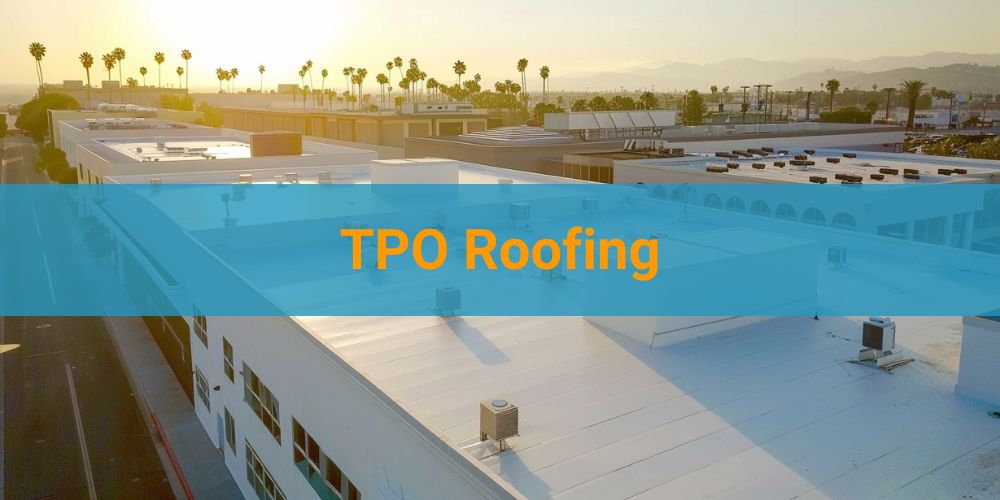
Commercial Roofing Long Beach provides TPO roofing services across Long Beach, California, for flat and low-slope commercial buildings that require reliable single-ply waterproofing, heat-welded seam performance, UV resistance, reflective roof performance, rooftop equipment integration, and system-specific roof management. TPO roofing, or thermoplastic polyolefin roofing, is a commercial single-ply membrane system installed over a suitable substrate, insulation layer, or cover board to create a durable roof assembly for large commercial and industrial roof areas. It is commonly used on warehouses, logistics buildings, retail properties, office buildings, restaurants, multi-tenant assets, light industrial units, marine-adjacent facilities, and port-adjacent commercial properties where roof performance depends on seam integrity, drainage control, membrane durability, attachment stability, and long-term water intrusion resistance. Commercial TPO roofing is not the same as a generic flat roof surface, temporary patch, roof coating, or interchangeable membrane system. Its performance depends on membrane thickness, weld quality, attachment method, flashing detail, insulation condition, cover board selection, substrate stability, rooftop equipment layout, drainage behaviour, UV exposure, wind exposure, coastal moisture, and remaining roof assembly viability. Commercial Roofing Long Beach repairs, maintains, restores, recovers, partially replaces, and fully replaces TPO roofing systems where the correct intervention can protect the building, reduce recurring leaks, and extend roof service life.
In Long Beach, TPO roofing suitability and long-term performance are influenced by marine-layer moisture, salt air, coastal humidity, strong sun exposure, Pacific wind, seasonal rainfall, low-slope drainage pressure, rooftop HVAC activity, service traffic, and the operational requirements of commercial and industrial buildings near Downtown Long Beach, Signal Hill, Lakewood, San Pedro, Terminal Island, Wilmington, and port-adjacent corridors. These conditions can stress heat-welded seams, expose flashing weaknesses, accelerate surface aging, increase wear around rooftop equipment, create ponding pressure, loosen edge details, and contribute to deterioration around drains, scuppers, gutters, parapets, coping systems, curbs, pipes, skylights, hatches, and roof-to-wall transitions. Commercial Roofing Long Beach evaluates whether a TPO roof is repairable, maintainable, restorable, coating-suitable, recoverable, partially replaceable, or ready for full commercial TPO roof replacement. Localised punctures, open seams, isolated weld defects, flashing failures, membrane splits, drain-area leaks, rooftop equipment damage, and limited surface wear may be repairable where the wider roof assembly remains dry, attached, and serviceable. Widespread seam failure, saturated insulation, unstable substrate, degraded attachment, repeated leaks, severe ponding, uplift damage, brittle membrane behaviour, or end-of-life deterioration may require partial replacement, recovery, or complete TPO roof replacement.
TPO roofing in Long Beach requires system-specific assessment because performance is controlled by membrane condition, heat-welded seam continuity, attachment stability, flashing quality, drainage behaviour, UV exposure, coastal moisture, rooftop equipment stress, insulation condition, and roof assembly viability.
- TPO roof suitability and system identification → TPO roofing performs correctly when the membrane, insulation, cover board, substrate, attachment method, and flashing package operate as one roof assembly → unknown membrane thickness, mixed repair materials, prior coating attempts, loose insulation, poor attachment, or incompatible details can reduce system reliability → roof inspection, membrane identification, attachment review, repair-history analysis, and substrate assessment determine whether repair, restoration, recovery, partial replacement, or full replacement is the correct route → TPO work is matched to the actual roof system rather than treated as generic flat roofing.
- Heat-welded seam performance → TPO roof seams rely on continuous hot-air welds to resist water entry across flat and low-slope commercial roof areas → UV exposure, thermal movement, ponding water, installation defects, contamination, rooftop traffic, and aging can weaken weld continuity → seam probing, cleaning, compatible patching, re-welding, reinforcement, or section replacement may be required → linear leak pathways are controlled before moisture travels through insulation, cover board, or the wider roof assembly.
- Membrane punctures and service-traffic damage → TPO membranes can be damaged by dropped tools, foot traffic, maintenance activity, sharp debris, equipment access, and repeated movement around rooftop service routes → small punctures or cuts may create direct water-entry points that spread moisture beneath the membrane if left unresolved → compatible membrane patching, heat-welded repair, walk pad installation, access-route protection, and equipment-zone reinforcement are selected where required → puncture-related leaks and service-traffic wear are reduced.
- Flashing, curb, and penetration detailing → HVAC curbs, vents, pipes, skylights, hatches, drains, exhaust units, conduit supports, service lines, parapets, and wall transitions interrupt the TPO membrane system and concentrate leak risk at small details → movement, vibration, wind exposure, sealant failure, service access, and poor termination work can open water-entry paths around these areas → curb flashing repair, pipe boot correction, drain tie-in work, compatible TPO reinforcement, termination re-securement, or detail replacement may be required → recurring leaks around penetrations and rooftop equipment are controlled.
- Low-slope drainage and ponding exposure → TPO roofs on commercial buildings depend on drains, scuppers, gutters, crickets, tapered insulation, and roof slope to move water away from vulnerable details → blocked drains, restricted scuppers, shallow slope, deflected decking, debris build-up, or water-retaining sections can keep sustained pressure on seams, flashings, patches, and membrane defects → drainage clearing, drain-area reinforcement, scupper correction, gutter planning, tapered insulation review, and repair of ponding zones may be needed → standing-water stress, recurring leak cycles, and moisture intrusion are reduced.
- Coastal moisture and salt-air exposure → marine-layer humidity, salt-laden air, and coastal condensation can accelerate deterioration around edge metal, fasteners, coping systems, gutters, roof accessories, equipment supports, and exposed termination details even when the TPO membrane field remains serviceable → repair and replacement planning must account for corrosion-prone components as well as membrane defects → fastener correction, metal replacement, edge-detail reinforcement, compatible sealant, flashing repair, and maintenance planning may be required → coastal leak risk is reduced around vulnerable roof zones.
- Wind exposure and perimeter securement → roof edges, corners, parapets, terminations, plates, fasteners, adhesives, coping systems, and edge-metal details are critical to TPO roof stability under Pacific wind exposure and open commercial roof conditions → weak attachment or outdated perimeter detailing can create uplift risk, membrane movement, edge failure, and water entry at roof boundaries → attachment review, perimeter reinforcement, edge-metal correction, termination repair, fastener pattern assessment, or replacement detailing may be selected → uplift vulnerability and edge-related roof failure are better controlled.
- Reflective roof performance and UV ageing → TPO roofing is often selected for reflective surface performance and resistance to sun exposure, but long-term UV, dirt accumulation, coastal residue, and surface weathering can reduce reflectivity and stress the membrane over time → cleaning, inspection, surface review, repair of aged areas, and evaluation of membrane condition help determine whether the roof remains serviceable → maintenance, restoration, coating suitability, or replacement is selected according to actual roof condition → reflective performance and weathering resistance are managed over the roof’s service life.
- Insulation, cover board, and substrate condition → TPO roof performance depends on the materials beneath the membrane as much as the membrane surface itself → wet insulation, crushed cover board, soft areas, unstable substrate, loose boards, or deck deterioration can cause surface repairs to fail and allow hidden damage to continue → soft-spot review, moisture indicators, core samples, attachment checks, and substrate evaluation are used before repair, recovery, or replacement is finalised → the selected TPO roofing pathway reflects the actual condition of the full assembly.
- Repair, recovery, or replacement decision → not every TPO roof problem should be handled with another localised patch → repeated leaks, widespread weld failure, saturated insulation, unstable substrate, severe ponding, uplift damage, brittle membrane, incompatible repairs, or end-of-life deterioration may make replacement or recovery more reliable than continued repair → Commercial Roofing Long Beach compares targeted repair, planned maintenance, restoration, coating suitability, recovery, partial replacement, and full commercial TPO roof replacement according to roof condition and owner priorities → the selected solution supports long-term performance rather than short-term concealment.
Commercial Roofing Long Beach delivers TPO roofing services as system-specific single-ply roof work, not generic flat roof repair. By assessing membrane thickness, weld continuity, seams, flashings, penetrations, drainage, attachment stability, insulation condition, cover board performance, substrate viability, coastal exposure, rooftop equipment layout, service-traffic wear, prior repairs, and remaining service life together, the correct TPO roofing solution can be selected for each Long Beach commercial property.
Which Long Beach TPO Roof Problems Require Professional Repair?
Long Beach TPO roof problems require professional repair when defects begin to threaten heat-welded seam continuity, single-ply membrane performance, drainage reliability, flashing integrity, rooftop equipment protection, attachment stability, insulation condition, or long-term roof assembly viability. TPO roofing should not be treated as a generic flat roof surface because thermoplastic polyolefin roof systems depend on membrane thickness, weld quality, compatible repair materials, substrate stability, cover board condition, insulation dryness, perimeter securement, and detail integration. Commercial Roofing Long Beach repairs TPO roof problems when localised defects can still be corrected before they spread into saturated insulation, widespread seam failure, repeated leaks, uplift damage, brittle membrane behaviour, or full commercial TPO roof replacement.
In Long Beach, TPO roof problems are often shaped by marine-layer moisture, salt air, coastal humidity, strong UV exposure, Pacific wind, seasonal rain, rooftop HVAC activity, service traffic, restaurant exhaust, warehouse use, port-adjacent exposure, and low-slope drainage pressure. These conditions can stress heat-welded seams, loosen edge details, wear reflective membrane surfaces, expose punctures, weaken flashings, damage walk paths, accelerate corrosion around metal accessories, and increase water-entry risk around drains, scuppers, gutters, parapets, coping systems, curbs, pipes, skylights, hatches, vents, equipment supports, roof edges, and roof-to-wall transitions. Commercial Roofing Long Beach reviews TPO roof problems in relation to membrane condition, weld continuity, flashing performance, penetration details, drainage behaviour, ponding exposure, rooftop equipment layout, attachment method, insulation condition, cover board performance, substrate stability, prior repair compatibility, coastal exposure, and remaining service life.
Commercial Roofing Long Beach treats TPO roof problems as professional repair issues when defects can compromise single-ply waterproofing, heat-welded seam performance, rooftop detail reliability, drainage control, attachment stability, or the wider Long Beach commercial roof assembly.
Commercial Roofing Long Beach delivers system-specific TPO roofing for Long Beach commercial properties where membrane condition, weld performance, flashing quality, drainage risk, rooftop equipment exposure, coastal weathering, repair compatibility, and replacement timing must be evaluated together.
- Open heat-welded seams → TPO roof systems depend on continuous hot-air welded seams to resist water entry across flat and low-slope commercial roof areas → seam openings may develop from poor original welding, thermal movement, contamination, ageing, ponding water, rooftop traffic, or repeated service activity → Commercial Roofing Long Beach reviews seam continuity, weld strength, moisture evidence, membrane condition, and surrounding roof stability before repair → compatible seam cleaning, probing, re-welding, reinforcement, or section replacement is used before water spreads beneath the membrane.
- Isolated weld defects and lap weakness → not every TPO seam issue is widespread, but small weld voids, loose laps, fishmouths, membrane wrinkles, failed patches, or weak repair edges can become direct leak paths → Long Beach UV exposure, roof movement, service traffic, and seasonal rain can enlarge these defects over time → Commercial Roofing Long Beach evaluates weld quality, lap geometry, repair compatibility, attachment stability, and moisture movement → local weld correction prevents isolated seam problems from becoming wider single-ply roof failure.
- Membrane punctures, cuts, and tears → TPO membranes can be damaged by dropped tools, sharp debris, HVAC maintenance, equipment access, foot traffic, wind-blown material, and repeated movement around service routes → even small punctures can allow water to travel beneath the membrane into insulation, cover board, or substrate layers → Commercial Roofing Long Beach reviews puncture depth, surrounding membrane condition, moisture indicators, traffic exposure, and patch compatibility before repair → heat-welded TPO patching restores waterproofing before the defect spreads.
- Rooftop equipment and service-route wear → HVAC units, exhaust fans, pipe supports, conduit runs, service lines, hatches, walk paths, curbs, vents, and rooftop access routes create concentrated wear on TPO roof systems → vibration, discharge, grease, chemicals, maintenance activity, and foot traffic can damage membrane surfaces, flashings, and penetration seals → Commercial Roofing Long Beach reviews equipment-zone wear, curb details, walk pad needs, pipe supports, discharge areas, and membrane abrasion → equipment-area repair and protection reduce recurring leaks around high-use roof zones.
- Flashing failure at curbs, parapets, and wall transitions → TPO roof performance depends on compatible flashing at HVAC curbs, parapets, walls, coping systems, skylights, hatches, roof edges, expansion joints, and roof-to-wall transitions → movement, poor termination, sealant breakdown, wind exposure, coastal weathering, or incompatible repairs can open leak paths at these details → Commercial Roofing Long Beach evaluates flashing height, termination security, membrane tie-ins, fastener condition, and transition geometry before repair → detail correction prevents recurring leaks at vulnerable vertical and perimeter areas.
- Penetration leaks around pipes, vents, drains, and conduit → pipes, vents, drains, electrical conduit, exhaust lines, service penetrations, and pipe boots interrupt the TPO membrane and require properly integrated waterproofing details → cracked boots, loose clamps, failed sealant, poor heat-welded flashing, ponding water, or vibration can cause repeated water entry → Commercial Roofing Long Beach reviews each penetration with the surrounding membrane, drainage path, equipment layout, and repair history → penetration repairs are completed with compatible TPO detailing rather than temporary sealant alone.
- Drain-area leaks and scupper-adjacent deterioration → drains, scuppers, gutters, overflow routes, and discharge edges concentrate water movement on low-slope TPO roofs → blocked drains, restricted scuppers, loose clamping rings, poor drain tie-ins, membrane stress, debris accumulation, or ponding water can weaken the roof around water-routing points → Commercial Roofing Long Beach reviews drain conditions, scupper transitions, gutter edges, ponding marks, membrane stress, and moisture evidence → drain-area reinforcement and compatible TPO repair help control water-entry risk at drainage control points.
- Ponding pressure and low-slope water retention → TPO roofs can handle ordinary weather exposure, but prolonged standing water can stress seams, flashings, patches, adhesives, insulation, and cover boards → ponding may result from shallow slope, deflected decking, blocked drains, debris build-up, settlement, restricted scuppers, or inadequate water-routing design → Commercial Roofing Long Beach evaluates ponding duration, drainage layout, slope behaviour, low areas, and water-stressed membrane sections → repair is paired with drainage correction where water retention is driving recurring deterioration.
- Wind-related edge movement and perimeter weakness → Pacific wind exposure can stress TPO roof edges, corners, terminations, coping systems, edge metal, fasteners, plates, adhesives, and perimeter securement → loose edge metal, lifted corners, membrane billowing, fastener withdrawal, adhesive failure, or termination movement may signal attachment risk rather than a minor defect → Commercial Roofing Long Beach reviews perimeter securement, attachment method, deck condition, edge-zone exposure, and roof-to-wall continuity → perimeter repair or reinforcement is completed before edge movement becomes wider uplift damage.
- Reduced reflectivity and UV-related membrane ageing → TPO is often selected for reflective roof performance, but long-term sun exposure, dirt accumulation, coastal residue, rooftop traffic, chemical exposure, and surface weathering can reduce reflectivity and weaken serviceability → surface ageing may remain repairable where the membrane is flexible, attached, and not brittle or widely deteriorated → Commercial Roofing Long Beach reviews membrane surface condition, reflectivity loss, chalking, cracking, brittleness, repair history, and remaining service life → maintenance, local repair, restoration, or replacement is selected according to actual membrane viability.
- Coastal corrosion around metal roof accessories → salt air, marine-layer moisture, coastal condensation, and port-adjacent exposure can corrode edge metal, fasteners, gutters, scuppers, coping systems, termination bars, equipment supports, exposed steel, and roof accessories around TPO systems → corrosion can loosen details and create leak paths even when the membrane field remains serviceable → Commercial Roofing Long Beach evaluates rust severity, fastener reliability, metal stability, flashing transitions, and replacement needs → corrosion-prone components are corrected before they undermine TPO roof performance.
- Wet insulation, soft areas, or hidden moisture beneath TPO → TPO roof problems may appear as small exterior defects while moisture is already spreading into insulation, cover board, or substrate layers → soft areas, staining, blistering, deflection, recurring leaks, and moisture indicators can show that local patching alone may be insufficient → Commercial Roofing Long Beach reviews moisture evidence, leak distribution, low areas, repair history, insulation condition, and substrate stability → wet areas are isolated for repair, partial replacement, or larger roof work rather than hidden beneath another patch.
- Failed prior repairs or incompatible patch materials → TPO repairs must be compatible with thermoplastic polyolefin membrane behaviour and heat-welded detailing → mastics, tapes, sealants, coatings, incompatible patches, poorly welded repairs, or repeated emergency fixes can obscure the true leak source and reduce repair reliability → Commercial Roofing Long Beach reviews repair history, material compatibility, weldability, adhesion condition, and moisture spread → failed repair layers are corrected before the roof receives another TPO repair, restoration, recovery, or replacement recommendation.
- Attachment instability or membrane movement → TPO roof systems may be mechanically attached, adhered, induction-welded, ballasted, or installed as part of a recovery assembly → loose plates, fastener back-out, adhesive failure, membrane flutter, wrinkles, billowing, shifting insulation, or perimeter movement can reduce system reliability → Commercial Roofing Long Beach reviews attachment method, fastener pattern, deck condition, insulation securement, wind exposure, and roof movement → attachment-related repairs are addressed before membrane movement creates seam failure or uplift risk.
- Repairable TPO defects approaching replacement-level risk → professional repair is most valuable when TPO defects are corrected before they become widespread seam failure, saturated insulation, unstable substrate, repeated leak activity, severe ponding damage, brittle membrane behaviour, or end-of-life deterioration → Commercial Roofing Long Beach compares targeted TPO repair, planned maintenance, reinforced restoration, recovery, partial replacement, and full commercial TPO roof replacement according to roof condition → early repair preserves the assembly where the membrane remains serviceable and replacement is not yet required.
Commercial Roofing Long Beach identifies Long Beach TPO roof problems that require professional repair by separating isolated, repairable defects from conditions that threaten the wider single-ply roof assembly. TPO repair may be required for open seams, weak welds, membrane punctures, rooftop equipment wear, flashing failure, penetration leaks, drain-area deterioration, ponding pressure, wind-related edge movement, reduced reflectivity, coastal corrosion, wet insulation indicators, failed prior repairs, attachment instability, or membrane defects approaching replacement-level risk. When these issues are evaluated early, Commercial Roofing Long Beach can determine whether TPO seam repair, membrane patching, flashing correction, penetration repair, drainage correction, rooftop equipment protection, perimeter reinforcement, restoration, recovery, partial replacement, or full commercial TPO roof replacement is the correct route for the Long Beach property.
Have a question about a commercial roofing project?
How Does Commercial Roofing Long Beach Diagnose TPO Roof System Failure?
Commercial Roofing Long Beach diagnoses TPO roof system failure by evaluating the full single-ply roof assembly rather than treating the issue as an isolated seam, puncture, flashing, drain, coating, or patch problem. A TPO roof can fail through heat-welded seam weakness, membrane punctures, attachment movement, flashing breakdown, penetration leaks, ponding pressure, rooftop equipment wear, insulation saturation, cover board damage, substrate instability, perimeter movement, wind-related uplift, coastal corrosion around metal details, incompatible prior repairs, or end-of-life membrane deterioration. Diagnosis determines whether the roof can be corrected with targeted TPO repair, planned maintenance, reinforced restoration, coating suitability review, recovery, partial replacement, or full commercial TPO roof replacement.
In Long Beach, TPO roof failure diagnosis must account for marine-layer moisture, salt air, coastal humidity, strong UV exposure, Pacific wind, seasonal rain, low-slope drainage pressure, rooftop HVAC activity, service traffic, restaurant exhaust, warehouse use, industrial operations, port-adjacent exposure, and corrosion-prone roof details. These conditions can weaken welds, stress membrane edges, expose punctures, reduce reflectivity, loosen perimeter securement, accelerate surface ageing, damage walk paths, corrode roof accessories, and increase moisture risk around drains, scuppers, gutters, parapets, coping systems, curbs, skylights, vents, pipes, hatches, equipment supports, and roof-to-wall transitions. Commercial Roofing Long Beach reviews the visible defect, the surrounding roof field, and the concealed assembly conditions before assigning the correct repair or replacement pathway.
Commercial Roofing Long Beach diagnoses TPO roof system failure by connecting membrane condition, weld continuity, flashing performance, drainage behaviour, rooftop equipment stress, attachment stability, moisture evidence, coastal exposure, and replacement timing into one roof assembly decision.
Commercial Roofing Long Beach delivers diagnostic TPO roofing for Long Beach commercial properties where thermoplastic polyolefin membrane performance, heat-welded seam reliability, drainage risk, rooftop detail condition, insulation dryness, attachment stability, and roof assembly viability must be evaluated together.
- TPO membrane and roof assembly identification → diagnosis begins by confirming that the roof is a TPO single-ply membrane system and identifying membrane thickness, attachment method, insulation layer, cover board, substrate, flashing package, existing layers, prior repairs, and recovery conditions → unknown membrane type, mixed repair materials, prior coating attempts, incompatible details, or hidden assembly changes can distort the repair decision → Commercial Roofing Long Beach confirms the actual roof assembly before specifying TPO seam repair, membrane patching, restoration, recovery, partial replacement, or full replacement → diagnosis is based on the real roof system rather than a generic flat-roof assumption.
- Heat-welded seam inspection → TPO roof performance depends on continuous hot-air welded seams across flat and low-slope roof areas → weld failure may appear as open laps, fishmouths, loose edges, voids, wrinkles, failed patches, contamination, or weak seam continuity → Commercial Roofing Long Beach reviews seam condition, weld consistency, repair edges, moisture evidence, traffic exposure, and surrounding membrane condition → seam weakness is classified as isolated repair work, broader seam reinforcement, section replacement, or replacement-level weld failure.
- Leak-source tracing and water-path review → interior leaks may appear far from the actual TPO roof entry point because water can travel through insulation, cover boards, deck flutes, ceiling spaces, conduits, wall transitions, and low-slope drainage paths → repairing the nearest visible exterior defect can leave the source unresolved → Commercial Roofing Long Beach compares interior leak locations, roof surface defects, seams, penetrations, drains, flashings, equipment curbs, slope patterns, and moisture indicators → the repair target is selected according to the water-entry path rather than the visible symptom alone.
- Membrane field condition review → TPO membrane fields can deteriorate through punctures, cuts, abrasion, surface ageing, UV exposure, chemical residue, foot traffic, shrinking, cracking, brittleness, membrane thinning, or repeated patching → field condition helps determine whether the roof is locally repairable or moving toward recovery, partial replacement, or full commercial TPO roof replacement → Commercial Roofing Long Beach reviews membrane flexibility, surface wear, puncture distribution, reflectivity loss, repair density, and remaining service life → diagnosis separates local membrane damage from wider single-ply roof deterioration.
- Flashing, curb, and penetration diagnosis → TPO roof failures commonly occur around HVAC curbs, vents, pipes, skylights, hatches, exhaust units, conduit supports, drains, parapets, wall transitions, coping systems, and roof-to-wall details → movement, vibration, poor termination, cracked sealant, wind exposure, ponding, service traffic, or incompatible repair materials can create recurring leak paths → Commercial Roofing Long Beach reviews flashing height, weld quality, termination security, curb condition, pipe boots, drain tie-ins, and surrounding membrane condition → detail failures are diagnosed before the roof is treated as a field membrane problem.
- Drainage and ponding-risk diagnosis → TPO roof system failure can accelerate where water sits against seams, patches, flashings, drains, scuppers, gutters, parapets, and low-slope field areas → blocked drains, restricted scuppers, clogged gutters, shallow slope, deflected decking, debris build-up, settlement, and inadequate water-routing design can cause recurring leaks and hidden moisture spread → Commercial Roofing Long Beach evaluates ponding duration, drainage layout, drain performance, scupper function, gutter condition, low areas, and water-stressed membrane sections → drainage failure is included in the TPO roofing pathway rather than treated as a separate maintenance issue.
- Rooftop equipment and service-traffic assessment → TPO roofs are vulnerable around HVAC units, exhaust fans, pipe supports, conduit runs, service lines, hatches, walk paths, curbs, vents, access routes, and mechanical platforms → vibration, discharge, grease, chemicals, maintenance activity, concentrated loads, and foot traffic can cause punctures, abrasion, membrane stress, flashing movement, and penetration leaks → Commercial Roofing Long Beach reviews equipment layout, curb details, walk pad condition, pipe support contact points, discharge routes, and service paths → equipment-heavy areas are classified separately from lower-risk membrane field zones.
- Attachment and perimeter securement review → TPO roofs may fail when attachment systems or perimeter details no longer resist wind and roof movement → loose plates, fastener back-out, adhesive failure, billowing membrane, lifted corners, edge-metal movement, termination failure, coping displacement, or roof-to-wall separation can create uplift-sensitive conditions → Commercial Roofing Long Beach reviews attachment method, fastener pattern, deck condition, perimeter securement, edge-zone exposure, and Pacific wind influence → attachment-related failure is addressed before it becomes wider roof system instability.
- Insulation, cover board, and substrate evaluation → TPO roof failure may involve wet insulation, crushed cover board, unstable substrate, deck deterioration, soft roof areas, deflected sections, or moisture trapped beneath the membrane → surface patching can fail when the roof base is saturated or unstable → Commercial Roofing Long Beach reviews soft spots, staining, blistering, moisture indicators, roof feel, deck condition, cover board performance, insulation condition, and suspected low areas → repair, restoration, recovery, partial replacement, or full replacement is selected according to the condition of the full roof assembly.
- Coastal corrosion and metal-detail diagnosis → Long Beach salt air, marine-layer moisture, coastal condensation, and port-adjacent exposure can corrode edge metal, fasteners, termination bars, gutters, scuppers, coping systems, exposed steel, equipment supports, roof accessories, and metal flashing components around TPO systems → corrosion can loosen details and create water-entry points even when the TPO membrane field remains serviceable → Commercial Roofing Long Beach reviews rust severity, metal stability, fastener reliability, flashing transitions, drainage metal, and replacement needs → corrosion-prone details are corrected before they undermine single-ply roof performance.
- Reflectivity, UV ageing, and surface condition review → TPO roofing is often selected for reflective performance and UV resistance, but dirt accumulation, coastal residue, sun exposure, chemical contamination, rooftop traffic, and membrane ageing can reduce reflectivity and serviceability over time → Commercial Roofing Long Beach evaluates surface weathering, chalking, brittleness, cracking, reflectivity loss, coating history, contamination, and membrane flexibility → diagnosis determines whether maintenance, cleaning, local repair, restoration, coating suitability review, recovery, or replacement is the correct pathway.
- Prior repair and compatibility review → TPO roof diagnosis must account for previous patches, mastics, tapes, sealants, coatings, incompatible membranes, emergency repairs, and failed welds → incompatible repair materials can obscure leak sources, prevent proper welding, trap moisture, and reduce confidence in additional patching → Commercial Roofing Long Beach reviews repair history, material compatibility, weldability, adhesion condition, coating presence, patch distribution, and recurring leak patterns → failed repair layers are corrected or removed before a new TPO repair or replacement decision is made.
- Moisture spread and leak distribution classification → one localised defect may be repairable, but repeated leaks across seams, drains, equipment zones, perimeter details, roof fields, prior repair areas, and wall transitions can indicate system-level failure → Commercial Roofing Long Beach evaluates leak frequency, interior impact, wet-area distribution, moisture indicators, insulation risk, and roof section boundaries → diagnosis determines whether targeted repair is enough or whether partial replacement, recovery, or full commercial TPO roof replacement is required.
- Recovery, restoration, or replacement suitability review → TPO roofs may qualify for repair, restoration, recovery, partial replacement, or full replacement depending on membrane condition, attachment stability, insulation dryness, substrate viability, drainage behaviour, code-sensitive conditions, and service-life goals → Commercial Roofing Long Beach compares repair viability, recovery suitability, restoration value, coating compatibility, moisture risk, existing layer conditions, and replacement timing → the final recommendation avoids both unnecessary tear-off and under-scoped patching.
- TPO roof system failure classification → after membrane condition, weld performance, leak paths, flashings, penetrations, drainage, rooftop equipment, attachment, perimeter securement, insulation, cover board, substrate, corrosion-prone details, prior repairs, surface ageing, and moisture spread are reviewed, the roof is classified into the correct action path → Commercial Roofing Long Beach determines whether the correct next step is targeted TPO repair, seam re-welding, membrane patching, flashing correction, penetration repair, drainage correction, rooftop equipment protection, reinforced restoration, recovery, partial replacement, or full commercial TPO roof replacement → the diagnosis connects visible roof defects to long-term single-ply roof assembly performance.
Commercial Roofing Long Beach diagnoses TPO roof system failure by separating local repairable defects from wider single-ply roof assembly failure. Diagnosis reviews heat-welded seams, membrane punctures, flashing details, penetrations, drainage behaviour, rooftop equipment wear, perimeter securement, attachment stability, insulation condition, cover board performance, substrate viability, coastal corrosion, UV ageing, prior repair compatibility, moisture spread, and remaining service life. This allows Commercial Roofing Long Beach to determine whether TPO seam repair, compatible membrane patching, flashing correction, penetration repair, drainage improvement, equipment-zone reinforcement, maintenance, restoration, recovery, partial replacement, or full commercial TPO roof replacement is the correct route for the Long Beach commercial property.
Have a question about a commercial roofing project?
What TPO Roof Repair and Restoration Methods Protect Long Beach Buildings?
TPO roof repair and restoration methods protect Long Beach buildings when the selected work corrects the true single-ply roof failure pattern instead of covering the nearest visible defect. TPO roofing depends on heat-welded seam continuity, membrane condition, flashing quality, penetration detailing, drainage behaviour, attachment stability, insulation dryness, cover board performance, substrate viability, rooftop equipment protection, and compatible repair materials. Commercial Roofing Long Beach selects TPO repair and restoration methods according to whether the roof requires local seam repair, membrane patching, flashing correction, penetration repair, drainage improvement, rooftop equipment-zone protection, perimeter re-securement, planned maintenance, reinforced restoration, recovery, partial replacement, or full commercial TPO roof replacement.
In Long Beach, TPO roof repair and restoration must account for marine-layer moisture, salt air, coastal humidity, strong UV exposure, Pacific wind, seasonal rain, low-slope drainage pressure, rooftop HVAC activity, service traffic, restaurant exhaust, warehouse use, industrial operations, port-adjacent exposure, and corrosion-prone roof details. These conditions can weaken welds, wear reflective surfaces, stress flashings, loosen edge details, damage walk paths, corrode metal accessories, create ponding pressure, and increase leak risk around drains, scuppers, gutters, parapets, coping systems, curbs, vents, pipes, skylights, hatches, rooftop units, pipe supports, roof edges, and roof-to-wall transitions. Commercial Roofing Long Beach protects Long Beach buildings by matching repair and restoration scope to the roof system, failure source, moisture profile, drainage risk, equipment layout, coastal exposure, and remaining service life.
Commercial Roofing Long Beach protects Long Beach buildings with TPO repair and restoration methods that preserve heat-welded seam performance, single-ply membrane continuity, drainage reliability, rooftop detail integrity, attachment stability, and long-term roof assembly value.
Commercial Roofing Long Beach delivers repair-and-restoration-focused TPO roofing for Long Beach commercial properties where membrane repair, weld correction, flashing reinforcement, drainage control, rooftop equipment protection, coastal durability, and replacement timing must be evaluated together.
- Heat-welded seam repair → TPO roof systems rely on continuous hot-air welded seams to resist water intrusion across flat and low-slope roof areas → open seams, weak welds, fishmouths, loose laps, voids, wrinkles, failed welds, or repair-edge weakness can create direct leak paths → Commercial Roofing Long Beach cleans, probes, prepares, re-welds, reinforces, or replaces affected seam areas according to membrane condition and weld viability → seam-related water entry is corrected before moisture spreads beneath the membrane.
- Compatible TPO membrane patching → punctures, cuts, tears, abrasion, isolated splits, tool damage, sharp-debris damage, and rooftop traffic wear may be repairable where the surrounding membrane remains dry, attached, and serviceable → Commercial Roofing Long Beach uses compatible TPO repair materials, hot-air welding, surface preparation, and patch detailing instead of generic mastics or incompatible materials → local membrane defects are sealed without compromising the wider single-ply roof system.
- Failed repair correction → TPO roofs often accumulate temporary patches, sealants, tapes, mastics, incompatible coatings, or poorly welded repair areas that do not match thermoplastic membrane behaviour → these repairs can hide leak sources, prevent clean welding, trap moisture, and weaken future repair reliability → Commercial Roofing Long Beach reviews prior repair materials, patch distribution, weldability, adhesion condition, and recurring leak history → failed repair layers are removed, corrected, reinforced, or replaced with compatible TPO detailing.
- Flashing and curb reinforcement → HVAC curbs, parapets, skylights, hatches, wall transitions, coping systems, expansion joints, roof edges, exhaust units, and rooftop equipment bases concentrate movement and water-entry risk → failed termination, cracked sealant, poor flashing height, weak welds, wind exposure, or service traffic can compromise TPO details → Commercial Roofing Long Beach repairs membrane tie-ins, reinforces flashing transitions, corrects curb detailing, re-secures terminations, and replaces failed detail sections where required → recurring leaks around vertical transitions are reduced.
- Penetration and pipe boot repair → pipes, vents, drains, conduit, exhaust lines, service penetrations, roof hatches, and pipe supports interrupt the TPO membrane and require compatible waterproofing details → cracked boots, loose clamps, failed sealant, poor welded flashing, movement, vibration, ponding water, or previous temporary repairs can create leak paths → Commercial Roofing Long Beach repairs or replaces pipe boots, penetration flashings, membrane collars, drain tie-ins, and surrounding TPO sections → water intrusion around small roof interruptions is controlled.
- Drain, scupper, and gutter-area repair → low-slope TPO roofs depend on drains, scuppers, gutters, overflow routes, and discharge edges to move seasonal rain away from vulnerable roof areas → loose drain clamping rings, restricted scuppers, clogged gutters, membrane stress, debris accumulation, ponding marks, and weak drain tie-ins can create recurring leaks → Commercial Roofing Long Beach repairs drainage-adjacent membrane, reinforces drain areas, corrects scupper transitions, reviews gutter edges, and improves water-routing details → water-entry risk is reduced at the roof’s drainage control points.
- Ponding-zone correction → standing water can stress TPO seams, adhesives, patches, flashings, insulation, cover boards, and low-slope membrane areas → ponding may result from shallow pitch, deflected decking, blocked drains, restricted scuppers, settlement, debris build-up, or inadequate drainage layout → Commercial Roofing Long Beach evaluates ponding duration, slope behaviour, low areas, drain performance, and water-stressed roof sections before repair → ponding-zone repair may include drain-area reinforcement, membrane correction, tapered insulation review, scupper improvement, or targeted replacement where water damage has spread.
- Rooftop equipment-zone protection → HVAC units, exhaust fans, vents, pipe supports, conduit runs, service lines, walk paths, hatches, curbs, and rooftop access routes create concentrated wear on TPO membranes → foot traffic, vibration, discharge, grease, chemicals, dropped tools, and repeated maintenance can cause punctures, abrasion, flashing movement, and penetration leaks → Commercial Roofing Long Beach adds equipment-area repair, curb reinforcement, walk pad installation, pipe support correction, access-route protection, and membrane reinforcement → high-use rooftop zones are protected before they become recurring leak areas.
- Walk pad and service-route reinforcement → TPO roofs can be damaged by repeated movement between hatches, ladders, HVAC units, exhaust systems, drains, service panels, and mechanical platforms → unprotected service paths can create abrasion, punctures, scuffing, weld stress, coating wear, and membrane thinning → Commercial Roofing Long Beach reviews service-traffic routes and installs or repairs walk pads and reinforced access paths where needed → maintenance traffic is directed away from vulnerable membrane and detail areas.
- Perimeter re-securement and edge-detail correction → Pacific wind exposure can stress TPO roof edges, corners, coping systems, edge metal, termination bars, adhesives, plates, fasteners, and roof-to-wall transitions → loose edge metal, lifted corners, billowing membrane, fastener withdrawal, adhesive failure, or perimeter movement can become uplift-sensitive roof damage → Commercial Roofing Long Beach evaluates attachment method, perimeter securement, deck condition, edge-zone exposure, and roof boundary details → edge repair and re-securement restore perimeter stability before wind damage spreads.
- Coastal corrosion detail correction → Long Beach salt air, marine-layer moisture, coastal condensation, and port-adjacent exposure can corrode edge metal, fasteners, termination bars, gutters, scuppers, coping systems, equipment supports, exposed steel, and roof accessories around TPO systems → corroded components can loosen details and create leak paths even where the TPO field membrane remains viable → Commercial Roofing Long Beach reviews rust severity, fastener reliability, metal stability, flashing tie-ins, and replacement needs → corrosion-prone components are treated, replaced, or integrated into the TPO repair scope.
- Reflective surface maintenance and ageing control → TPO roofing is often selected for reflective performance and UV resistance, but dirt, coastal residue, rooftop traffic, chemical exposure, and long-term weathering can reduce surface performance → Commercial Roofing Long Beach reviews membrane cleanliness, reflectivity loss, chalking, brittleness, cracking, surface wear, and remaining service life → maintenance, cleaning, local repair, coating suitability review, restoration, recovery, or replacement is selected according to actual membrane viability.
- Insulation and cover board correction → TPO repair can fail if wet insulation, crushed cover board, soft areas, loose boards, deck deterioration, or hidden moisture remains beneath the membrane → Commercial Roofing Long Beach reviews soft spots, staining, moisture indicators, leak distribution, cover board performance, substrate stability, and roof feel before repair scope is finalised → affected sections may require selective opening, insulation replacement, cover board correction, partial replacement, or recovery rejection where hidden damage is present.
- Reinforced TPO restoration → some TPO roofs can be restored where membrane defects are controlled, seams are viable, insulation remains dry, attachment is stable, and roof details can be reinforced → restoration may include seam work, membrane patching, flashing correction, drain-area repair, walk pad protection, edge reinforcement, coating suitability review, and planned maintenance → Commercial Roofing Long Beach evaluates whether restoration can extend service life without concealing saturated insulation, widespread weld failure, unstable substrate, severe ponding, or end-of-life deterioration → restoration is used only where the roof assembly can support it.
- Partial TPO roof replacement → some TPO roofs have failed sections while other roof areas remain serviceable → saturated insulation, repeated leak zones, severe ponding areas, failed rooftop equipment sections, damaged perimeter zones, or widespread seam failure in one roof section may require selective replacement → Commercial Roofing Long Beach defines replacement boundaries by reviewing moisture spread, roof section layout, tie-in conditions, drainage paths, membrane age, and surrounding roof condition → failed sections are replaced without unnecessary tear-off of viable areas.
- Recovery and full replacement planning → recovery may be suitable where the existing TPO roof assembly is dry, stable, code-viable, compatible, and able to support a new roof layer → full replacement may be required where repeated leaks, saturated insulation, unstable substrate, severe ponding, degraded attachment, widespread seam failure, brittle membrane behaviour, or end-of-life deterioration prevents reliable repair → Commercial Roofing Long Beach compares repair, restoration, recovery, partial replacement, and full commercial TPO roof replacement before recommending work → the selected pathway protects long-term roof performance rather than hiding failure.
Commercial Roofing Long Beach protects Long Beach buildings through TPO repair and restoration methods that match the actual condition of the single-ply roof system. Heat-welded seam repair, compatible membrane patching, failed repair correction, flashing reinforcement, penetration repair, drain-area repair, ponding-zone correction, rooftop equipment-zone protection, walk pad installation, perimeter re-securement, coastal corrosion correction, reflective surface maintenance, insulation correction, reinforced restoration, partial replacement, recovery planning, and full replacement planning are selected according to membrane condition, weld performance, drainage risk, rooftop detail reliability, attachment stability, moisture evidence, coastal exposure, and remaining service life. This allows TPO roofing work to preserve waterproofing continuity, reduce recurring leaks, protect rooftop equipment zones, control Long Beach exposure damage, and extend roof assembly performance where repair or restoration remains reliable.
Have a question about a commercial roofing project?
When Does a Long Beach TPO Roof Require Recovery or Replacement?
A Long Beach TPO roof requires recovery or replacement when targeted repair, planned maintenance, seam correction, membrane patching, flashing repair, penetration repair, drainage correction, or reinforced restoration can no longer provide reliable single-ply roof performance. TPO recovery or replacement becomes the correct pathway when the roof problem has moved beyond isolated defects and is affecting the wider assembly, including heat-welded seams, membrane field areas, flashings, penetrations, insulation, cover board, substrate, attachment system, perimeter securement, rooftop equipment zones, drainage areas, or repeated repair sections. Commercial Roofing Long Beach evaluates whether the correct route is TPO roof recovery, partial replacement, selective tear-off, insulation replacement, deck correction, perimeter upgrade, or full commercial TPO roof replacement based on roof condition, moisture profile, attachment stability, drainage behaviour, coastal exposure, and remaining service life.
In Long Beach, recovery and replacement decisions must account for marine-layer moisture, salt air, coastal humidity, strong UV exposure, Pacific wind, seasonal rain, low-slope drainage pressure, rooftop HVAC activity, service traffic, warehouse use, restaurant exhaust, industrial operations, port-adjacent exposure, and corrosion-prone roof details. These conditions can accelerate membrane ageing, weaken heat-welded seams, loosen edge securement, damage rooftop equipment zones, create ponding pressure, corrode metal accessories, and spread moisture beneath the membrane. Commercial Roofing Long Beach determines whether TPO recovery or replacement is required by reviewing leak frequency, weld failure distribution, membrane condition, insulation dryness, cover board stability, substrate viability, attachment method, roof layers, drainage layout, perimeter performance, prior repair history, code-sensitive conditions, and the operational needs of the building.
Commercial Roofing Long Beach recommends TPO roof recovery or replacement when the existing roof assembly can no longer support dependable seam performance, membrane repair, drainage control, attachment stability, moisture resistance, rooftop detail reliability, or long-term commercial roof protection.
Commercial Roofing Long Beach delivers recovery-and-replacement-focused TPO roofing for Long Beach commercial properties where membrane condition, weld continuity, insulation status, attachment stability, drainage risk, coastal exposure, roof layer compatibility, and replacement timing must be evaluated together.
- Widespread heat-welded seam failure → isolated TPO seam openings may be repairable with cleaning, probing, re-welding, reinforcement, or compatible membrane patching → recovery or replacement becomes more likely when weld failure appears across multiple seams, laps, prior repair edges, roof sections, or water-stressed areas → Commercial Roofing Long Beach reviews weld continuity, seam distribution, moisture evidence, repair history, and membrane condition → distributed seam failure is treated as an assembly-level issue rather than another local seam repair.
- Repeated leaks across multiple roof areas → one leak may be corrected with targeted TPO repair, but repeated leaks around seams, drains, flashings, equipment curbs, roof edges, penetrations, field membrane areas, and prior patches may show wider roof failure → Commercial Roofing Long Beach evaluates leak frequency, interior impact, water-entry paths, moisture spread, repair density, and affected roof zones → recovery, partial replacement, or full TPO replacement is considered where local repair no longer provides dependable leak control.
- Saturated insulation or wet cover board → TPO roof repair becomes unreliable when moisture has entered insulation, cover board, substrate layers, or concealed roof assembly areas → patching or recovering over wet material can trap moisture and shorten the life of the next roof system → Commercial Roofing Long Beach reviews soft areas, staining, blistering, roof feel, moisture indicators, leak distribution, and suspect low areas before selecting scope → saturated sections require selective tear-off, insulation replacement, partial replacement, or full replacement rather than surface repair alone.
- Unstable substrate or deck concerns → TPO recovery and replacement decisions depend on whether the roof base can support the next assembly → crushed insulation, loose boards, unstable cover board, deteriorated wood deck, rusted metal deck, cracked concrete, deflected sections, or fastening weakness can prevent reliable repair, recovery, or attachment → Commercial Roofing Long Beach evaluates substrate stability, deck viability, fastening potential, soft areas, and load-sensitive zones → deck correction, substrate repair, selective tear-off, or full replacement is included where the existing base is not reliable.
- Severe ponding or embedded drainage failure → a TPO roof may be repairable where drainage problems are localised and correctable → recovery or replacement becomes necessary where long-duration ponding, blocked drainage, restricted scuppers, deflected decking, shallow slope, saturated low areas, or repeated drain-area leaks have damaged the assembly → Commercial Roofing Long Beach reviews ponding duration, drainage layout, drain condition, gutter function, scupper performance, slope behaviour, and tapered insulation options → the replacement or recovery scope may include drainage redesign or slope correction.
- Attachment instability or wind-related movement → TPO roofs rely on secure attachment through mechanical fastening, adhesive bonding, induction welding, ballast, perimeter termination, or recovery-compatible securement → loose plates, fastener back-out, adhesive failure, membrane billowing, lifted corners, edge-metal movement, or roof-to-wall separation can indicate system instability → Commercial Roofing Long Beach reviews attachment method, deck capacity, fastener pattern, perimeter securement, Pacific wind exposure, and edge-zone performance → recovery or replacement is recommended where attachment failure cannot be corrected locally.
- Membrane brittleness, shrinkage, or end-of-life ageing → TPO membrane can move beyond practical repair when it becomes brittle, cracked, shrunken, fatigued, heavily weathered, repeatedly punctured, or no longer weldable in a dependable way → reduced flexibility and poor weldability can make new patches less reliable → Commercial Roofing Long Beach reviews membrane age, flexibility, weld response, surface condition, reflectivity loss, crack distribution, repair history, and remaining service life → replacement becomes the stronger pathway where the membrane can no longer support durable repairs.
- Rooftop equipment zones have become recurring failure areas → HVAC units, exhaust fans, curbs, vents, pipe supports, hatches, walk paths, service routes, and rooftop platforms can create repeated stress on TPO systems → local equipment-zone repair may work where damage is contained → recovery or replacement becomes more appropriate where vibration, discharge, grease, chemicals, service traffic, punctures, flashing failure, or saturated areas affect multiple equipment zones → Commercial Roofing Long Beach reviews equipment layout, curb condition, penetration density, walk path needs, and surrounding membrane viability before defining scope.
- Perimeter securement and edge-detail failure → roof edges, corners, parapets, coping systems, termination bars, edge metal, fasteners, plates, adhesives, and roof-to-wall transitions are critical to TPO roof stability → loose edge metal, coping movement, lifted corners, termination failure, membrane billowing, or repeated perimeter leaks can make local repair insufficient → Commercial Roofing Long Beach evaluates perimeter condition, edge-zone exposure, deck support, attachment method, and wind-related movement → recovery or replacement scope may include upgraded edge securement and perimeter detailing.
- Coastal corrosion has compromised roof accessories → Long Beach salt air, marine-layer moisture, coastal condensation, and port-adjacent exposure can corrode fasteners, edge metal, gutters, scuppers, coping, termination bars, equipment supports, exposed steel, and roof accessories around TPO roofs → corrosion treatment may be enough where deterioration is localised → recovery or replacement becomes necessary where corrosion has caused loose securement, failed drainage metal, weakened edge details, open transitions, or repeated water entry across multiple areas → Commercial Roofing Long Beach reviews corrosion spread before selecting repair, metal replacement, recovery, or full replacement.
- Failed prior repairs or incompatible materials → TPO roofs with repeated mastics, tapes, sealants, coatings, incompatible patches, poorly welded details, or emergency repairs may lose a clear repair boundary → incompatible materials can prevent clean welding, hide leak paths, trap moisture, and reduce confidence in another patch → Commercial Roofing Long Beach reviews repair history, patch distribution, weldability, adhesion condition, material compatibility, and moisture spread → recovery or replacement is considered where the roof can no longer be reliably repaired with compatible TPO detailing.
- Recovery is viable but repair is no longer enough → roof recovery may be appropriate when the existing TPO assembly is dry, stable, code-viable, compatible, and capable of receiving a new roof layer → recovery may be stronger than ongoing repair where the building needs renewed waterproofing, improved reflectivity, better attachment, upgraded insulation, stronger perimeter securement, or improved rooftop equipment protection → Commercial Roofing Long Beach reviews existing layers, moisture status, deck capacity, attachment requirements, drainage behaviour, and code-sensitive conditions → recovery is selected only where it improves performance without concealing hidden failure.
- Partial TPO replacement can isolate failed sections → not every Long Beach TPO roof requires complete replacement when failure is concentrated in one roof section, drainage zone, equipment field, perimeter area, saturated section, or expansion area → Commercial Roofing Long Beach defines partial replacement boundaries by reviewing moisture spread, roof section layout, seam transitions, tie-in conditions, drainage paths, membrane age, and surrounding roof condition → partial replacement allows failed TPO sections to be renewed while serviceable areas remain in place.
- Full commercial TPO roof replacement is required → full replacement becomes necessary when several failure signals appear together, including widespread seam failure, repeated leaks, saturated insulation, unstable substrate, severe ponding, degraded attachment, brittle membrane behaviour, perimeter movement, failed repairs, and end-of-life deterioration → Commercial Roofing Long Beach reviews the full assembly before defining tear-off scope, insulation replacement, cover board selection, substrate repair, drainage upgrades, perimeter securement, flashing package, and installation sequencing → the building receives a TPO roof system planned for long-term commercial performance.
- Operational risk requires planned replacement before emergency failure → replacement timing should account for the building’s use, not only visible roof condition → a TPO roof may require planned recovery or replacement before catastrophic failure where leaks threaten inventory, tenants, restaurant operations, warehouse workflows, office interiors, rooftop equipment, electrical systems, or active commercial use → Commercial Roofing Long Beach reviews access, staging, weather windows, temporary dry-in, debris control, tenant coordination, and facility continuity → planned replacement reduces disruption and avoids reactive emergency roof work.
Commercial Roofing Long Beach determines that a Long Beach TPO roof requires roof recovery or replacement when the system has moved from repairable single-ply defects into wider assembly failure, moisture risk, attachment instability, drainage failure, or end-of-life membrane deterioration. TPO recovery or replacement may be required where heat-welded seam failure is widespread, leaks recur across multiple roof zones, insulation is saturated, substrate conditions are unstable, ponding is severe, attachment has weakened, membrane flexibility has declined, equipment zones repeatedly fail, perimeter securement is compromised, coastal corrosion has spread, or prior repairs are no longer reliable. By evaluating membrane condition, weld performance, moisture profile, drainage behaviour, attachment stability, rooftop equipment exposure, coastal detail durability, roof layer compatibility, and operational needs together, Commercial Roofing Long Beach can define whether recovery, partial replacement, selective tear-off, or full commercial TPO roof replacement is the correct route.
Why Is Commercial Roofing Long Beach Suited to Coastal TPO Roof Systems?
Commercial Roofing Long Beach is suited to coastal TPO roof systems because TPO roofing in Long Beach must be evaluated as a complete single-ply roof assembly, not as a generic flat roof surface or interchangeable membrane. TPO performance depends on membrane thickness, heat-welded seam continuity, attachment stability, flashing quality, penetration detailing, drainage behaviour, insulation dryness, cover board performance, substrate viability, perimeter securement, rooftop equipment protection, coastal corrosion control, and remaining service life. In Long Beach, marine-layer moisture, salt air, coastal humidity, strong UV exposure, Pacific wind, seasonal rain, rooftop HVAC activity, service traffic, restaurant exhaust, warehouse use, industrial operations, port-adjacent exposure, and low-slope drainage pressure can all affect whether a TPO roof remains watertight, reflective, attached, repairable, restorable, recoverable, or ready for replacement.
Commercial Roofing Long Beach approaches TPO roofing as diagnostic, system-specific single-ply roof work. A coastal TPO roof may require seam probing, heat-welded repair, compatible membrane patching, flashing correction, penetration repair, drainage improvement, ponding-zone correction, rooftop equipment-zone protection, walk pad installation, perimeter re-securement, corrosion-prone detail correction, insulation review, cover board correction, reinforced restoration, roof recover, partial replacement, or full commercial TPO roof replacement depending on actual roof condition. This matters because under-scoped TPO work can leave weak welds, trapped moisture, unstable substrate, loosened edge details, failed flashings, saturated insulation, poor drainage, corroded accessories, or equipment-zone damage unresolved beneath a surface-level repair.
Commercial Roofing Long Beach is suited to coastal TPO roof systems because it connects thermoplastic polyolefin membrane condition, heat-welded seam reliability, Long Beach coastal exposure, rooftop equipment stress, drainage behaviour, attachment stability, moisture evidence, and replacement-boundary judgement before selecting the roofing pathway.
Commercial Roofing Long Beach delivers coastal TPO roofing for Long Beach commercial properties where single-ply waterproofing reliability, heat-welded seam performance, rooftop detail coordination, drainage control, attachment stability, coastal durability, and long-term roof management are evaluated together.
- Single-ply TPO system awareness → TPO roofing is a thermoplastic polyolefin single-ply roof system, not a generic flat roof covering → performance depends on membrane thickness, weld quality, attachment method, insulation condition, cover board selection, substrate stability, flashing package, and perimeter detailing → Commercial Roofing Long Beach evaluates the complete roof assembly before recommending repair, restoration, recovery, partial replacement, or full commercial TPO roof replacement → the selected pathway matches the actual TPO roof system.
- Heat-welded seam expertise → TPO roofs rely on hot-air welded seams to resist water intrusion across flat and low-slope commercial roof fields → seam weakness, open laps, weld voids, fishmouths, contamination, wrinkles, poor repair edges, or distributed weld failure can create recurring leak paths → Commercial Roofing Long Beach reviews seam continuity, weld condition, membrane viability, water-entry evidence, and repair compatibility → seam repair is handled as a core TPO roof performance issue rather than a temporary patching task.
- Long Beach coastal exposure judgement → Long Beach commercial roofs face marine-layer moisture, salt air, coastal condensation, Pacific wind, strong UV exposure, seasonal rain, port-adjacent residue, and low-slope drainage stress → these conditions can accelerate surface ageing, reduce reflectivity, loosen edge details, corrode metal accessories, stress seams, and increase moisture risk around drains, scuppers, flashings, and rooftop equipment → Commercial Roofing Long Beach accounts for coastal exposure before selecting TPO repair, restoration, recovery, or replacement → the roof recommendation is matched to local conditions rather than generic inland assumptions.
- Attachment and perimeter securement control → TPO roof stability depends on secure attachment through mechanical fasteners, adhesives, induction welding, ballast, edge metal, termination bars, plates, and perimeter detailing → Pacific wind exposure can stress roof edges, corners, parapets, coping systems, fasteners, and membrane terminations → Commercial Roofing Long Beach reviews attachment method, perimeter securement, deck condition, edge-zone exposure, roof-to-wall continuity, and uplift-sensitive movement → edge and attachment risks are corrected before they become wider roof system failures.
- Flashing, curb, and penetration coordination → TPO roofs are vulnerable around HVAC curbs, skylights, hatches, vents, pipes, drains, exhaust units, conduit supports, parapets, coping systems, wall transitions, and roof-to-wall details → movement, vibration, poor termination, cracked sealant, weak welded details, service traffic, and wind exposure can create recurring water-entry points → Commercial Roofing Long Beach evaluates flashing height, weld quality, curb condition, pipe boots, drain tie-ins, termination security, and surrounding membrane condition → rooftop details are integrated into the TPO roof plan rather than treated as separate patch locations.
- Drainage and ponding-risk management → flat and low-slope TPO roofs depend on drains, scuppers, gutters, crickets, tapered insulation, field slope, and perimeter discharge routes to move water away from seams and details → blocked drains, restricted scuppers, clogged gutters, shallow slope, deflected decking, settlement, debris build-up, and water-retaining sections can stress membrane seams, patches, insulation, and cover boards → Commercial Roofing Long Beach evaluates drainage layout, ponding duration, low areas, drain performance, gutter condition, scupper function, and slope-correction opportunities → drainage behaviour is treated as a core TPO system requirement.
- Rooftop equipment-zone protection → Long Beach commercial buildings often have HVAC units, exhaust fans, pipe supports, conduit runs, service lines, vents, hatches, curbs, walk paths, and access routes that interrupt or stress TPO membranes → foot traffic, vibration, grease, chemicals, discharge, dropped tools, and repeated maintenance can cause punctures, abrasion, flashing movement, and penetration leaks → Commercial Roofing Long Beach reviews equipment layout, curb condition, walk pad needs, service routes, pipe support contact points, and discharge areas → high-use rooftop zones are protected before they become recurring leak areas.
- Coastal corrosion and metal-detail control → salt air, marine-layer moisture, coastal condensation, and port-adjacent exposure can corrode edge metal, termination bars, gutters, scuppers, fasteners, coping systems, exposed steel, roof accessories, and equipment supports around TPO systems → corroded components can loosen waterproofing details even when the membrane field remains serviceable → Commercial Roofing Long Beach reviews rust severity, fastener reliability, metal stability, drainage metal, flashing transitions, and replacement needs → corrosion-prone components are corrected before they undermine TPO roof performance.
- Reflective performance and UV ageing review → TPO roofing is often selected for reflective roof performance and UV resistance, but sun exposure, dirt accumulation, coastal residue, chemical contamination, rooftop traffic, and weathering can reduce surface performance over time → Commercial Roofing Long Beach evaluates reflectivity loss, membrane cleanliness, chalking, brittleness, cracking, surface wear, contamination, and remaining service life → maintenance, cleaning, local repair, restoration, recovery, or replacement is selected according to actual TPO membrane viability.
- Insulation, cover board, and substrate discipline → TPO roof work can fail when wet insulation, crushed cover board, unstable substrate, loose boards, deck deterioration, or hidden moisture remains beneath the membrane → surface repairs may look correct while concealed roof assembly failure continues underneath → Commercial Roofing Long Beach reviews soft spots, moisture indicators, leak distribution, cover board performance, deck condition, substrate stability, and suspected low areas before finalising scope → repair, recovery, partial replacement, or full replacement is based on the condition of the full assembly.
- Compatible repair and restoration discipline → TPO repair requires materials and methods compatible with thermoplastic polyolefin membrane behaviour → mastics, tapes, sealants, incompatible patches, prior coatings, poor welds, or emergency repairs can hide leak sources, prevent clean welding, trap moisture, and weaken future repair reliability → Commercial Roofing Long Beach reviews prior repairs, weldability, material compatibility, adhesion condition, patch distribution, and moisture spread → repair and restoration work is selected for long-term system compatibility rather than short-term coverage.
- Recovery and replacement judgement → TPO repair is valuable where defects are isolated and the assembly remains dry, attached, compatible, and serviceable → recovery may be suitable where the existing roof is dry, stable, code-viable, and capable of receiving a new roof layer → replacement may be required where seam failure is widespread, insulation is saturated, substrate is unstable, attachment has degraded, ponding is severe, or the membrane has reached end-of-life condition → Commercial Roofing Long Beach compares repair, restoration, recovery, partial replacement, and full TPO replacement before recommending work → property owners avoid both under-scoped patching and unnecessary tear-off.
- Long-term TPO roof management → TPO roof performance is easier to preserve when seam condition, membrane wear, rooftop traffic, walk paths, drainage performance, edge securement, reflectivity, flashings, penetrations, prior repairs, and reinspection timing are documented over time → Commercial Roofing Long Beach supports long-term roof control through inspection planning, seam monitoring, drainage checks, equipment-zone review, walk path assessment, corrosion tracking, photo documentation, priority repair planning, and replacement planning → the TPO roof remains more predictable, serviceable, and cost-controlled across its lifecycle.
Commercial Roofing Long Beach is suited to coastal TPO roof systems because it evaluates TPO roofing as a complete single-ply assembly exposed to Long Beach coastal, rooftop, drainage, wind, and service-traffic pressures. By reviewing membrane thickness, heat-welded seams, weld continuity, flashings, penetrations, drainage, rooftop equipment layout, attachment method, perimeter securement, coastal corrosion risk, reflective surface condition, insulation dryness, cover board performance, substrate stability, prior repairs, restoration suitability, recovery viability, replacement timing, and long-term maintenance needs together, Commercial Roofing Long Beach can define the correct TPO roofing pathway. This allows TPO roofing work to protect single-ply waterproofing, reduce recurring leaks, preserve reflective performance, control coastal detail deterioration, support rooftop equipment areas, and extend roof service life where repair, restoration, or recovery remains reliable.
When Should a Long Beach Property Request a TPO Roofing Assessment?
A Long Beach commercial property should request a TPO roofing assessment when a flat or low-slope thermoplastic polyolefin roof is showing heat-welded seam weakness, membrane punctures, flashing wear, penetration leaks, rooftop equipment damage, reduced reflectivity, surface ageing, drainage sensitivity, ponding pressure, coastal moisture stress, salt-air deterioration around roof details, wind-related edge movement, failed prior repairs, or early moisture intrusion while the wider roof assembly may still be repairable, maintainable, restorable, recoverable, or partially replaceable. TPO roofing assessments are most valuable before isolated seam defects, punctures, or flashing failures develop into widespread weld breakdown, saturated insulation, attachment instability, substrate deterioration, repeated leak cycles, or full replacement requirements. In Long Beach, marine-layer moisture, coastal humidity, salt air, strong UV exposure, Pacific wind, seasonal rain, rooftop HVAC activity, service traffic, restaurant exhaust, warehouse use, industrial operations, port-adjacent exposure, and low-slope drainage pressure can accelerate deterioration across TPO membrane seams, field areas, flashings, penetrations, drains, scuppers, gutters, parapets, coping systems, roof edges, fasteners, plates, insulation layers, cover boards, and equipment zones. TPO roofs with recurring leaks, open welds, punctured membrane sections, worn reflective surfaces, localised flashing stress, damaged walk paths, ponding zones, loose edge details, corrosion-adjacent metal components, or rooftop traffic damage should be reviewed before those conditions spread beneath the membrane or compromise the wider roof assembly.
Commercial Roofing Long Beach evaluates TPO roofing assessment requests by reviewing membrane thickness, membrane condition, heat-welded seam integrity, weld continuity, flashing performance, penetration details, drainage behaviour, ponding exposure, rooftop equipment layout, service-traffic routes, attachment stability, perimeter securement, wind-exposed edges, coastal corrosion risk, prior repair compatibility, insulation condition, cover board performance, substrate stability, moisture presence, leak distribution, surface reflectivity, and remaining service life. This determines whether the correct next step is TPO seam repair, membrane patching, heat-welded reinforcement, flashing correction, penetration repair, drainage correction, rooftop equipment area repair, walk path protection, perimeter re-securement, corrosion-prone detail correction, planned maintenance, roof restoration, recovery, partial replacement, or full commercial TPO roof replacement. Requesting an assessment early helps prevent repairable TPO roof issues from becoming system-wide failures after seam breakdown, moisture spread, attachment movement, coastal detail deterioration, insulation damage, severe drainage stress, repeated leak activity, or UV-related membrane decline has reduced the roof’s repair or restoration viability. When the TPO roof is evaluated while the assembly remains serviceable, Commercial Roofing Long Beach can determine whether targeted repair, reinforced restoration, recovery, partial replacement, or complete TPO roof replacement is the correct route based on the actual condition of the single-ply roof system. If your Long Beach commercial property has TPO seam defects, membrane punctures, flashing leaks, rooftop equipment wear, ponding concerns, reduced reflectivity, wind-related edge movement, coastal moisture exposure, salt-air detail deterioration, wet insulation indicators, failed prior repairs, recurring leaks, or uncertainty around whether the roof requires repair, restoration, recovery, partial replacement, or full replacement, request a TPO roofing assessment from Commercial Roofing Long Beach to define the correct next step based on membrane condition, weld performance, drainage risk, attachment stability, coastal exposure profile, moisture status, insulation condition, and roof assembly viability.